Written by Farzana Panahi, Translated by Mahdi Akrami
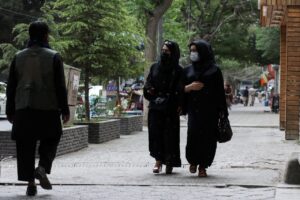
Gender discrimination in Afghanistan is not confined to rural areas. Across the cities, Taliban policies have systematically restricted women’s participation in public life. However, the impact is far more severe for women in remote villages.
Widespread poverty, low literacy rates, lack of healthcare, limited economic opportunities, and the absence of support systems have placed rural women in conditions far harsher than those faced by urban women. In these regions, gender discrimination is not just a legal or cultural issue; it is a direct threat to women’s survival.
Since the Taliban returned to power, the systematic exclusion of women from education, employment, and healthcare has fundamentally altered life in rural communities.
The ban on girls’ education has erased years of progress. Rural women and girls who once had access to community schools and literacy programmes are again deprived of basic learning. While some urban families manage informal or online education, most rural girls are denied schooling even at the primary level. These restrictions have triggered a chain of secondary crises: rising rates of early and forced marriage, declining household incomes, and complete economic dependence on male relatives. In many villages, girls are married before the age of 18, often as a desperate attempt to ease financial pressure. These marriages expose young women to domestic violence and deny them access to essential healthcare.
Access to healthcare has collapsed sharply for rural women. Taliban-imposed restrictions on women’s movement and the banning of female medical staff in many rural clinics have left pregnant women and sick women with few options. Previously, national and international aid organisations deployed midwives, nurses, and female doctors to remote areas to fill gaps in the healthcare system. Now, with travel without a male guardian banned and female healthcare workers largely confined to urban centres, those lifelines have disappeared. Visiting male doctors is also heavily restricted.
As a result, rural women are often forced to give birth at home or rely on traditional remedies. These methods significantly increase the risk of maternal and infant death. Reports from provinces such as Ghor, Uruzgan, Samangan, Takhar, and Badakhshan show a sharp rise in maternal mortality during childbirth over the past four years. Budget cuts to rural clinics have further deepened the crisis, leaving women without medicine or vital treatment.
Drought, Poverty, and the Burden on Women
Beyond state-imposed restrictions, prolonged drought and climate shocks have intensified rural hardship. Years of drought and declining groundwater levels have devastated agriculture and livestock, destroying the foundations of rural livelihoods.
With crop failures and economic collapse, many men migrate to Iran or Pakistan for work. Their absence transfers the full weight of household responsibilities onto women: managing the home, farming, caring for livestock, tending to the elderly, and raising children. Yet in a society where women cannot inherit or own land, more labour does not translate into economic power. Their working hours have increased, but their decision-making power and social status remain unchanged. Drought has also added severe physical strain. As wells and springs dry up, women must walk long distances each day to fetch water. This exhausting task harms their physical and mental health, especially for pregnant women and the elderly.
The collapse of rural economies and the erosion of support networks have also fuelled a rise in early marriages and, in some cases, the sale of daughters to pay off debts. This is not solely due to poverty. It is also the result of the disappearance of former aid systems and community-based support structures.
Two Crises, One Reality: Absolute Defenselessness
These two crises, gender discrimination and climate-driven poverty, are interconnected, each intensifying the other. Without access to education or formal employment, women have little protection against coercion and violence. At the same time, drought, hunger and economic collapse force them into deeper dependence on male relatives, further entrenching inequality. Today, rural Afghan women live in what activists describe as a state of “absolute defencelessness.” They are denied schooling, income and healthcare. If in cities discrimination restricts women’s public presence, in rural areas it endangers their very survival. Here, women are not only stripped of their social rights but also deprived of the right to live safely.
Despite their central role in sustaining families, rural women remain the most powerless segment of Afghan society. This inequality is turning Afghanistan’s gender gap into a humanitarian crisis.
Footnote: The photo is from the Internet