Reported by: Mastoureh Mobarez
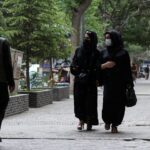
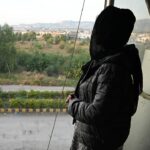
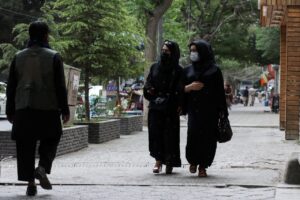
Education is one of the most fundamental human rights and a cornerstone for the progress of any society. With schools closed to girls, thousands of children and adolescents have been denied their inalienable right to learn. In this difficult and worrying situation, a group of young people committed to scientific and educational values in one of the northern provinces (name withheld) decided not to let the light of education go out. Despite the restrictions and the risks of defying the Taliban’s orders, they have created an alternative opportunity for girls to continue their studies.
Rozaneh School was established on January 21, 2023, in one of the northern provinces. Operating secretly, the school currently serves 110 female students from grades 7 to 12, with a staff of 11 (one male and ten female). The school teaches English, history, mathematics, physics, and chemistry to all students.
The day the school doors closed to girls marked the end of a dream for many, but for others, it was the beginning of a difficult and perilous journey. Ahmad Sharifi (pseudonym), a university professor and the founder of Rozaneh School, is among those who stood up to this darkness, determined to keep education alive.
“The day the school doors were closed to girls, my world collapsed,” he says. “I was deeply concerned and heartbroken that women and girls were being denied their right to education. They must continue their studies and become aware, because the future of this society rests in their hands.”
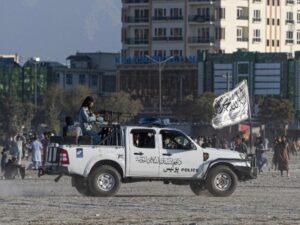
He says the situation was more than a personal pain; it was a social responsibility that compelled him to make a difficult and costly decision. Despite security threats and the risk of torture from the Taliban, Sharifi moved forward to establish Rozaneh School with the help of a group of young people in the province. He first reached out to several youths concerned about education, who were willing to stand up for their peers’ right to learn. Eventually, a team of fifteen members was formed, united in their determination to ensure that girls’ education would not be interrupted.
Today, around 110 girls at Rozaneh School, guided by 10 teachers, are voluntarily attending lessons from grades 7 to 12. Core subjects are taught to them on a regular basis.
Fereshteh Azimpour (pseudonym), one of Rozaneh School’s teachers, decided to work alongside the educational team to safeguard girls’ right to education, fully aware of the difficult circumstances and risks involved. She currently teaches chemistry to students in grades 7, 8, and 9, carrying out her work with dedication and commitment. According to her, this role is more than just a job—it is a social and humanitarian responsibility. She feels fulfilled knowing she can provide learning opportunities for girls under such conditions and views education as a means to empower and inspire the next generation.
Farhat Akbari (pseudonym), a 10th-grade student at the school, deeply appreciates the teachers’ decision to continue lessons. She says that after schools were closed, she faced serious psychological challenges, and the lack of schooling severely affected her morale. With the establishment of Rozaneh School, however, she was able to resume her education and regain her lost hope.
The« Rozaneh» School demonstrates that with commitment, solidarity, and a sense of human responsibility, education can continue even in the most difficult circumstances. The dedication of the teachers and the motivation of the students have not only ensured the continuation of learning but also restored hope, psychological stability, and foresight to many students’ lives.
Photo credited: Internet