Reporter Hamid Mahdi, Translator Rostam Safdari
The Taliban’s newly released penal code for its courts has drawn widespread criticism, with legal experts and rights advocates warning that it entrenches discrimination and formalises unequal punishment. Taliban authorities have rejected the criticism, declaring opposition to the directive a criminal offence and warning that critics could face prosecution.
The document introduces few new rules explicitly targeting women. A series of earlier decrees has already barred women from education, employment, and public life, leaving little room for further restrictions. Yet critics say the directive’s underlying structure further marginalises women by embedding inequality into the legal system itself.
At the heart of the penal code is a class-based model of justice. The directive explicitly divides citizens into four social categories: clerics, elites, middle class, and lower class. Those in higher categories are largely exempt from punishment, while corporal punishment and imprisonment are applied only to the middle and lower classes.
An analysis by Afghanistan Women’s Voice found that women and girls are effectively confined to the categories subject to punishment. Women are barred from education, preventing them from entering the clerical class, and prohibited from most forms of employment, excluding them from commercial and elite ranks.
As a result, the group concludes that women are systematically placed in the classes most vulnerable to imprisonment and physical violence.
Rights observers state that the legal framework reflects the reality women already face. Many women and girls live under severe psychological strain, largely confined to their homes in what activists describe as a form of enforced domestic detention. Others experience ongoing harassment, abuse, and sustained violence.
Article 34 of the directive explicitly defines women as subordinate to men. It states that if a woman goes to her father’s home without her husband’s permission and remains there, and if the father refuses to return her despite a request from the husband and an order from a judge, both the woman and her father will be sentenced to three months in prison.
Shahrazad Akbar, former chair of Afghanistan’s Independent Human Rights Commission, said in a recent interview with Radio BBC radio that the directive represents a serious violation of human rights and undermines human dignity.
“In all countries, whether Islamic or non-Islamic, citizens have equal legal identity and rights,” Ms Akbar said. “Under the Taliban’s self-declared system, people are divided into first- through fourth-class citizens.”
Analysts note that even within this rigid hierarchy, women occupy the lowest position. The four formal categories are defined primarily around men, and because the Taliban regard women as inferior, critics say women are effectively assigned unwritten, lower ranks beyond the stated classifications.
Ms. Akbar and other legal experts have warned that enforcing the directive will entrench long-term violence. They argue that the Taliban have transformed discrimination into a permanent legal structure, making Afghanistan increasingly unsafe and dehumanising for women and girls.
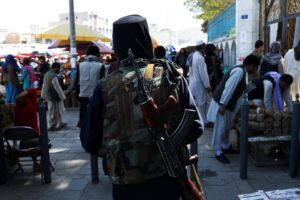
Photo credited: Internet