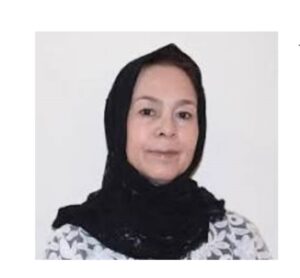
Authors: Aisheh Safi
As the world prepares to celebrate International Women’s Day, in Afghanistan, women’s narrative speaks not of celebration, but of exclusion and limitation. As March 8 approaches, an experience in Herat city shows how deep the gap between universal slogans and the reality of women’s lives in this country is.
After more than ten years away from home, returning to Herat was a return to memories for me: visiting family, walking in the old streets of the city, and enjoying the beauties that had been alive in my mind for years. But on the third day of the trip, what should have been a sweet memory turned into a bittersweet experience.
For lunch we went to one of the most well-known restaurants in the city, the Four Seasons Restaurant. We were expecting to sit in an open space and enjoy the pleasant atmosphere of the restaurant, but we were led to a section that was covered with thick curtains on all sides, a closed space separate from others.
When I asked why, the answer was short:
“You’re the lady with you.”
At that moment, my tears completely stopped. I had neither the ability to object nor the ability to explain. The food was on the table, but it was poison to me. Every bite of it wounds my throat like a thorn. I was silent, but inside I was screaming. Humiliation had a taste that no spice could cover.
In order to alleviate this bitterness a little, we decided to visit one of the most important historical symbols of the city, the Citadel of Herat, a building that has stood for centuries and narrates the history and culture of this land.
But in front of the gate of the citadel, we were faced with a different answer:
“We don’t give tickets to women.”
Then they asked:
“Which passport do you have? If you have a foreign passport, you are allowed to enter, but with a domestic passport, women are not allowed.”
At that moment, the breath was locked in my chest. The young girl of the family, with her childlike enthusiasm, just wanted to take a picture of the citadel. He was not even allowed to enter the courtyard. The reason was only one thing: being a girl.
When I came out of the gate, I couldn’t hold myself anymore. My anger burst and I cried so loudly that people gathered around me. They asked:
“Who hit you?”
“Which place hurts?”
But I did not dare to tell the truth. I couldn’t say that my pain was the pain of ignoring humanity. I couldn’t say that my crying was to break a girl’s dream. Because for many of them, it was a normal scene.
And perhaps this normalization of injustice is more painful than the injustice itself.
The restriction of women in Afghanistan is not just an individual issue; it has a direct impact on the country’s social and cultural identity. The elimination of women from public spaces means the elimination of half of society from participation in social and cultural life.
Historical heritage belongs to all citizens. When women are deprived of it, they are deprived of the right to belong to their history and their collective identity.
On the eve of March 8, the fundamental question is:
Can a society that keeps half of its population behind curtains and closed doors achieve a just and sustainable future?
The tears that flowed that day in front of the Herat Citadel may have dried up in silence, but their message remained:
Human dignity is indivisible.
And no society will achieve excellence by normalizing humiliation.
Photo credited: Internet