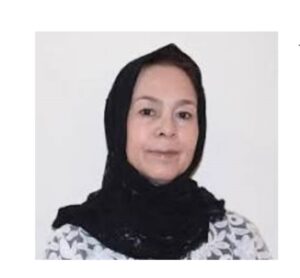
Reporter: Mahya Omid
In a quiet corner of her home, colorful threads move between her fingers. She ties each knot with care and works without pause—as if with every knot she weaves a piece of her sorrow, and with each dish scrubber she finishes, she sets aside a small part of her pain.
Khatera, a 28-year-old woman in Herat, has no choice but to work from home. She earns just three Afghanis for each dish scrubber she weaves and sells—an amount that barely meets the daily cost of living.
Before the Taliban takeover in 2021, Khatera worked as an ironer in a tailoring workshop. She recalls, “I had a good job before the Taliban. I worked daily from eight in the morning until four in the afternoon. My salary was decent, and I loved my work. But two months after the Taliban arrived, our workshop was shut down, and I was left unemployed.”
After the workshop closed, Khatera stayed at home, dedicating all her time to household chores and looking after her two children. She explains, “I was out of work for four years. My husband earned a living driving a rickshaw, but once the Taliban banned rickshaw operations, he became unemployed as well.”
After her husband lost his job and economic pressures intensified, Khatera decided to work from home. “There was no work left for us outside. I wanted to learn tailoring and earn, but my husband didn’t allow it—he told me to stay at home. My mother had taught me weaving when I was a child. I watched a couple of YouTube videos on making dish scrubbers, and then I began on my own.”
Khatera recalls that, for the first time, she went to the market without her husband’s permission and bought yarn specifically for weaving. The following day, she brought the dish scrubbers to the market and struck a deal with a shopkeeper to sell them.
Her first experience gave her hope. “The shopkeeper bought one for ten Afghanis and said he wanted to purchase from me every day and then sell them to his customers. I bought more yarn and wanted to weave more, but my husband objected. I had to struggle to convince him. After all, if I don’t work, my husband cannot support our children under these conditions of unemployment.”
Today, she weaves more than twenty dish scrubbers each day—a task she describes as not difficult, but requiring careful attention and skill. She sells each one for seven to eight Afghanis, making a profit of three Afghanis per scrubber. She says the market is never consistent; some days are better than others, giving her a renewed sense of hope.
Despite her attempts to sell directly, social restrictions continue to be a major barrier. Khatera explains, “One day I sold dish scrubbers directly to a few women and earned more. I told my husband that I would handle sales myself in the market, but he argued, saying, ‘What’s next, that people will say your wife is selling among men outside the home?’”
She acknowledges these concerns: “My husband is partly right. The Taliban harass women walking along the streets, so imagine the risk for a woman trying to sell something.”
Khatera’s story is more than the account of one woman struggling to survive; it reflects a broader shift where women’s work has transformed from a right and an opportunity into a hidden and hazardous activity. This change has not only curtailed women’s earnings but also forced them out of public spaces, marginalizing their presence.
Despite all these challenges, Khatera keeps working with determination, weaving not just dish scrubbers but also fragments of hope for herself and her children.
Photo credited: Internet