Reported by: Aref Shadeig
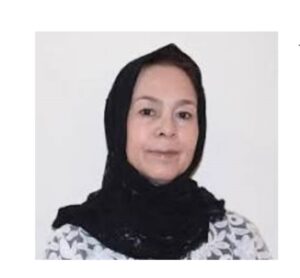
Not long ago, sunrise in Kabul marked the beginning of a day filled with hope for Sahar. Every morning, she would leave home excited to attend university spend her day studying specialized courses at the Faculty of Pharmacy and in the afternoons, serve her community by working at one of the country’s healthcare institutions. By the time she earned her bachelor’s degree, she was fluent in Dari, Pashto and English. Together with her husband she looked forward to building a bright future for themselves and their children.
But one day—just one day—was enough for all those dreams to disappear.
On August 15, 2021, the Taliban regained control of Afghanistan. For Sahar and millions of Afghan women and girls, their return marked the end of one era and the beginning of another—one in which the rights to education, employment, and participation in public life were taken away one by one. From their very first days back in power the Taliban limited girls’ education to the sixth grade and pushed women out of workplaces and public spaces.
Like thousands of other educated Afghan women Sahar Rahrov was faced with a painful choice؛ stay in a country where oppression and restrictions were tightening day by day, or leave everything behind to protect the safety and future of her children. She chose the second path and left Afghanistan.
This report tells her story—the story of a woman who lost everything so that her children would not lose their future.
Homeless and Without a Homeland
The years before 2021 were years of growth and achievement for Sahar Rahrov. She had studied at the Faculty of Pharmacy, earned a bachelor’s degree, worked for one of Afghanistan’s healthcare institutions, spoke several languages fluently, built strong connections with the people around her, and was regarded as one of the successful women in her community.
Her life had purpose. She had a career, an education, a family, and hopes for the future. But everything changed after the Taliban returned to power. One restriction after another cast a shadow over the lives of women. Like many of her colleagues Sahar was no longer allowed to work. Her rights to education employment and freedom of movement were taken away. The fear of the future grew heavier with each passing day. She knew that if she stayed not only she but also her children would be denied the right to education and the chance to live a normal life.
Leaving her homeland was the hardest decision Sahar Rahrov had ever made. But growing insecurity, increasing restrictions and the bleak outlook for the future left her with no choice but to leave Afghanistan.
She says:
« I was separated from my home, my friends and my relatives. I lost my job, my opportunity to continue my education and the peace I once had in my life. I had to start over and struggle with the hardships of living far from home.»
Together with her family, she left Afghanistan and fled to Pakistan. It was neither her home nor her homeland, but a temporary refuge from the nightmare the Taliban had created.
Exile: Loss and Hardship
Arriving in Pakistan did not mark the end of Sahar’s struggles—it was the beginning of a different kind of hardship. In a foreign country without legal residency, a stable job or the support of relatives and friends, she had to rebuild her life from the ground up.
She says:
« My access to essential services is limited and I continue to face problems related to my legal status.»
But the most painful chapter of Sahar Rahrov’s life was written neither when she lost her job nor when she left her homeland. It came on an ordinary day, in an ordinary month while she still believed she could build a new life in a foreign country.
She was only sixteen weeks pregnant when she was stopped by the police in one of Islamabad’s residential areas. Although neither she nor her family had committed any crime they were detained and taken to a security checkpoint.
At the checkpoint, despite being in a sensitive stage of her pregnancy, Sahar was not allowed to sit down. The family was also asked to pay a large sum of money. Unable to afford it they were forced to remain standing for nearly twelve hours.
For Sahar, who was sixteen weeks pregnant and in need of proper medical care the experience was physically exhausting and deeply harmful.
During this time, they repeatedly contacted the United Nations, the refugee office and various organizations through phone calls and emails, requesting assistance, access to medical care and referrals to a doctor. However, they received no response, and no effective support was provided.
Eventually, due to the harsh conditions, the lack of necessary medical care and the neglect of her health condition Sahar lost her baby. Since then, her health has not improved. According to her doctor’s advice, she requires a blood transfusion, but because she does not have valid documents in Islamabad, obtaining medical services, undergoing medical examinations, and receiving the required blood transfusion have become extremely difficult.
Sahar says:« Because I do not have legal residency, I even lost my child. Without a visa, hospitals here do not provide medical services.»
This painful and heartbreaking statement reflects the reality of an Afghan migrant who did not lose her child because of an illness or an accident, but simply because she lacked a visa—because of nothing more than a piece of paper.
This is an example of the harsh reality faced by millions of Afghan migrants in neighboring countries؛ countries that, through strict laws and unfair treatment have forgotten compassion, ethics and humanity.
Every day and every moment Sahar and her husband try to comply with the laws of the host country, gather the money needed to renew her visa—which becomes more expensive with each passing day—and free themselves from the constant burden of residency concerns.
Despite all these difficulties her husband continues to search for a suitable solution to improve her living conditions and access to treatment. But life in exile, despite all these efforts remains a struggle between loss and suffering.
Children Deprived of Their Right to Education
Sahar Rahrov is a mother—a devoted mother who came to Pakistan for the future of her children hoping that they would have access to education. However, her children have also been deprived of their right to study.
She says:
« I left Afghanistan with great difficulty. My children need primary education, but they have been deprived of the opportunity to learn.»
This sentence is not only the story of one family؛ it is the story of a generation of Afghan children who are growing up in migration, in poverty without security, and on the margins of host communities. They are deprived of education and no organization provides them with educational services.
Financial difficulties, the lack of a stable job, concerns about the future and limited access to education are Sahar’s biggest challenges. She knows that most Afghan migrants are struggling with the same problems: economic difficulties, residency issues and a lack of healthcare and educational services.
They need support and better opportunities to live and work but these opportunities are becoming more distant and harder to reach with each passing day.
According to a United Nations report, nine out of every ten people in Afghanistan live in poverty. Those who are forcibly returned to their country face destroyed infrastructure, widespread unemployment and a lack of basic services.
Sahar knows that returning would mean going back to the same restrictions and insecurity she had escaped from. However, staying in Pakistan does not offer a hopeful future either.
Hope in the Heart of Hardship
Despite all these difficulties, Sahar still has hope. She says:
«For me, life means hope, effort, and building a better future for myself and my children.»
She lives for security, peace, progress, supporting her family, and achieving her dreams.
According to official reports, nearly two million Afghan migrants live in Pakistan. Sahar Rahrov is one of these two million people who was forced to migrate because of social and educational restrictions.
With all her strength she continues to struggle to build a future for herself and her children in exile.
Sahar’s story is a tragic one؛ the story of a woman who left her homeland out of fear of a dark future, only to face the loss of her child, insecurity, unemployment, and uncertainty in exile.
Her story is the story of millions of homeless Afghans who are living in neighboring countries on the margins of society, waiting for an unclear tomorrow.
But within this painful story, there is one bright point: hope. Despite all the hardships she has faced, Sahar is still working to build a better future. She still believes that life is worth fighting for.
Perhaps one day, circumstances will change. Perhaps one day, Afghan girls will be able to return to school, women will be able to continue their work and migrants will be able to return to their homes.
Until that day comes, Sahar and thousands like her continue to stand strong—with hope in their hearts and burdens on their shoulders.
Photo credited: Internet