Tales of the Dark Age (No. 100)
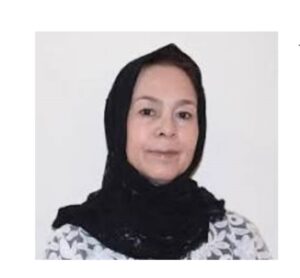
On a bitter winter afternoon in Kabul, as a pale sun struggled through heavy clouds, a woman arrived from the snow‑covered highlands of Behsud district of Wardak Province. Her name was Benazir.
She stepped into the modest home where we had arranged to meet on Friday, 14 February 2026, at around two o’clock. Her husband followed her through the doorway, two young sons stepping quietly behind him, brushing the fine crust of snow from their sleeves. She had come to speak a truth she had carried alone for decades. A truth wrapped in loss, disguise, and survival. A story of living as a bacha posh, a girl forced to assume a boy’s identity.
The room was warm, but she kept her shawl held close around her shoulders, as though warmth was something she had not yet decided she could trust. We thanked her for making the long journey through the dangerous winter passes so that the story she carried could finally find a place to land. She nodded quietly when we explained that we had come from Afghanistan Women’s Voice, a publication dedicated to documenting the lives and struggles of Afghan women. She was not only a witness. She was one of the voices.
When we asked her to begin, she folded her hands in her lap, took a slow breath, and looked down at her fingers. “I will tell you everything I remember,” she said, her voice gentle and unhurried, the voice of a village woman unaccustomed to speaking her memories aloud to strangers. For a moment, she seemed to gather herself, as if memory were a heavy curtain she needed to lift.
“I lost my mother and father when I was very young,” she said. “After they died, everything collapsed. I felt alone in the world. I had a brother and a sister, but they ran away to Iran. They could not bear the cruelty of my uncle’s family.”
She fell silent for a moment, as if something deep within her had suddenly fractured. From beneath the edge of her headscarf, a muted sorrow seemed to rise through the stillness that settled over her. When she finally spoke again, her voice carried the weight of memories she had tried for years to leave untouched.
“Finally,” she said, “I took refuge in the house of my uncle’s sons. Can you imagine such a misfortune? As if fate had no mercy, my uncle himself had already died. Only his sons remained, and they beat me. They cursed at me. Day and night, they made me work, though I was just a child. When I think about that time now, my heart bleeds. In that house, I endured humiliation and misery beyond measure.”
She lowered her gaze, her fingers tracing the edge of her scarf, as if feeling the threads of those distant years. “Even now, remembering it is like pressing on a wound that never healed, a wound deep in my chest that still aches. Speaking about it today has brought back the sound of their blows. It felt as though they wanted to erase me from that house entirely. I endured hunger. I endured humiliation. What else could I have done? I had no one but them. I was helpless, and they tormented me.”
She paused again, her voice tightening as she continued.
“One of my uncle’s sons was older. He kept telling me to marry him. I refused. I could not accept him. I was only a small girl. I knew nothing about marriage.”
She fell quiet again, as if preparing to step back into a distant corner of her memory. It was the kind of silence that stretched across years. For a moment, she looked as though she were counting the threads of the carpet at her feet, grounding herself before continuing.
“I remember,” she said slowly, “that everyone who had ever travelled from our village, whether they went far or stayed close, eventually returned. Everyone. Except my brother and sister. No matter how long I waited, my brother never came back.”
She drew a shaky breath. “Then one day I realized that my uncle’s sons were preparing to leave on a journey. I found out they were planning to go to Iran. And in the deepest part of my heart, I thought this was my chance. If I could follow them, maybe I could find my brother. He was my refuge. He was like a father to me.”
She adjusted her scarf and continued.
“When they set out, I walked after them. That was all I could think to do. I understood that if I wanted to join them, no one could know I was a girl. Imagine that moment. What could a child like me do? I had to hide myself. So I changed my clothes. I found a set of boys’ clothes belonging to one of my uncle’s sons and put them on. As far as I remember, it was early evening. Yes, I think it was evening. I left my uncle’s house and ran away…” … She paused again, the weight of that night settling between her words.
She reached for her tea and lifted the cup to her lips, letting the warm liquid ease her throat. For a moment, it seemed as if the memory of every dry silence she had endured over the course of her life rose within her all at once. We told her, gently, that she was more than a survivor of her own story. She had come to embody something larger, a quiet symbol of the hidden discrimination embedded in Afghan society. Her years as a bacha posh, the world she moved through in borrowed clothes, revealed more about the country’s unspoken realities than any statistic or report ever could.
She set the cup down, its rim still trembling slightly from her hand, and picked up the thread of her story.
“I followed my uncle’s sons,” she said. “Sometimes I ran. Sometimes I fall. Sometimes I stopped to catch my breath. I do not know at what point on the road I finally reached them or what time of day it was. When I did, I cried so much. I begged them. I pleaded for them to take me with them. But they sent me back home.”
She paused, the memory tightening around her.
“They went on, and I was left with nothing but my crying and my grief. It felt like losing a brother all over again. When I realized they would not take me, I felt suspended between earth and sky, with nowhere to stand and nothing to hold on to. Imagine a young girl, alone and without anyone, lost in unfamiliar places. What do you think becomes of her?”
She lifted part of her scarf to cover her face. We did not look at her. We could sense that she was quietly wiping away tears. Staying turned slightly away, we told her that there was no way we could fully comprehend what it must have felt like to be an orphaned child, frightened, running for safety, living as a bacha posh before she was even old enough to understand the world around her.
“Please,” we said softly. “Tell us what happened next. When your uncle’s sons refused to take you with them, what did you do after that?”
It was as if she stepped back into that moment. A faint tremble slipped into her voice.
“I was terrified to return to my uncle’s house,” “She said, ‘My whole body shook at the thought of it. If I went back, they would beat me. They would pull my hair. They would strike me with a whip, with sticks, with a walking cane, and with that rope made from cattail. They could tear my hair out. They could leave my whole body black and blue from the beatings. Or they might throw me out and say, “You worthless daughter of Qanbar, get lost. Go back to wherever you came from. Do not ever return.” And then what would I do?”
The room grew quiet. Her words hung in the air, shaped by fear that still lived inside her like something that had never fully faded.
“I had nowhere,” she said finally. “I had no one in the world.”
She fell silent again. Her gaze dropped to the floor, her eyes beginning to fill. It was as if the sorrow of all her earlier years had risen suddenly and pressed against her. For several moments, she did not speak. We told her that it was impossible for us to truly grasp what she had endured. The simple act of telling her story, we said, might lighten her heart, even if only slightly. Her story was not hers alone. It belonged to countless girls across this land. She did not carry this weight by herself. Girls in every corner of this country had lived some version of what she lived…. “You said you were too afraid to return to your uncle’s home, and you had nowhere else to go,” we reminded her. “Please continue.”
She took a breath, steadying herself, and then went on.
Something caught in her throat. We urged her to rest for a moment. A few minutes passed before we spoke again, telling her that a small girl in such a harsh and dangerous situation would inevitably face unthinkable hardship. We explained that this was the reality for so many women in Afghanistan, and that she was one of the many silent symbols of the hidden discrimination they endure. Then we asked her where she went after fleeing her uncle’s house. How she survived the nights. Where she slept. Whether she wandered through mountains or valleys.
She glanced around the room. It was as if fear had returned to her body, as if memories were beginning to sting again. Her mind filled with images that seemed painful even to recall.
“I had taken a set of boys’ clothes from my uncle’s sons, and I was wearing them,” she said. “When I separated from them, the light was fading. The evening was turning dark. I reached a mill. I spent my first night there. I remember being afraid of what might happen. I cannot recall whether it was the miller or someone else who ground the grain, but whoever was there allowed me to stay. I do not remember what he asked or said. I only remember staying until morning. The only thing that remains clear in my mind is the steady sound of the mill turning, the fear, and the feeling of wandering with nowhere to go. But inside the mill, at least, I felt safe from animals.”
She went quiet again. Her eyes fixed on the floor, and a thin shine gathered across them. It was as if a heaviness from years past had risen up and settled in her chest. For a few moments, the room fell silent. We told her that it was nearly impossible for us to truly grasp what she had lived through. The very act of telling her story might ease her heart. Her story was not hers alone. It was part of the story of many girls in this country. She did not carry this sorrow by herself. Across Afghanistan, countless girls had known pieces of this same history.
“You said you were too frightened to return to your uncle’s home and too alone to know where else to go,” we reminded her. “Please continue.”
She nodded slightly and began again.
“I was lost,” she said. “I kept asking myself what I should do. Where could I go? Where could I seek shelter? I walked without any idea of a destination. I had no picture of a path in my mind. I simply moved in some direction. I do not know where it was or where I was heading. I walked. That is all I did. Tears kept falling as I went. I had no destination. Night came. The darkness grew terrifying. I was afraid.”
Something tightened in her throat. We asked her to rest for a moment, to breathe. Several minutes passed. Then we told her that a small girl alone in such harsh circumstances would inevitably face unimaginable hardship. We explained that this was the reality for so many Afghan women, and that she herself was one of the clearest symbols of the hidden discrimination girls endure. Then we asked her again what happened after she fled her uncle’s house. Where she went. How she survived the nights. Whether she passed through mountains, valleys, or barren stretches of land.
She looked around the room. It was as if old fear had begun to stir inside her again. Her mind filled with memories that seemed painful even to recall.
We found ourselves thinking how nearly impossible it was to imagine what this small girl must have felt in such circumstances. Unless someone has lived it, there is no true way to grasp it. Anyone who tries to picture themselves in the place of a young bacha posh, abandoned and afraid, would feel their own body tremble.
We told her that by sharing her story, her voice would reach far beyond this room. She took a few sips from her second cup of tea, letting the warmth settle in her throat before continuing.
“When I left the mill in the morning, I returned to the same confusion as the day before,” she said. “I had no destination. No place to stay. No direction to choose. I walked without any purpose. I did not think. I just moved forward. I do not remember what time of day it was when I reached Chaparsak. I only remember that there was a small market. There were shops and cars and the sound of people moving around.”
She paused, gathering the memory.
“And suddenly, I saw my uncle’s sons. They were right there. In my heart, I felt a moment of happiness. I thought I could join them and somehow reach my brother. I pretended not to know them. I was wearing boys’ clothes, so I felt sure they would not recognize me. But I was still afraid. What if they discovered who I was? How would they treat me then?”… She tightened her scarf around her shoulders.
“I told them I thought they were traveling to Iran. I begged them to take me with them. I said that once I reached my brother, he would pay for my travel and expenses. I told them all I wanted was to go to him. I pleaded with them. I held onto their clothes. But they did not take me. They left without me.”
Her voice grew quiet.
“And I remained behind again. Alone. Lost. Wandering without direction. Where could I go? Where could I stay? Who would take me in? I walked away from the market in Chaparsak. I simply walked without any destination. I cannot remember exactly where I went. Many years have passed since then. My mind does not help me much now. I am not well.”
She fell silent again, stopping her sentence halfway. For a moment, it felt as though the frightened girl she once had been was suddenly sitting before us, not the woman wrapped in winter shawls but the child who had run alone through darkness with swollen, aching feet. We had no way of knowing whether she wore shoes during those long nights on the road, but as she sat there now, we sensed that the memory of raw blisters and bruised soles had returned to her.
We asked whether she remembered the name of the place she came from, the land that once belonged to her family. She sank deep into thought, as if searching through the dimmest corners of her memory, overturning fragments of childhood she had long lost contact with. After a long pause, she finally said, in a quiet and uncertain voice, “I do not know. All I can remember from that road are the names Zardani and Chaparsak.”
We explained gently that if she had left the mill at dawn, walked for hours, reached Chaparsak by day, and passed through the place she remembered as Zardani, then her childhood home must have been somewhere near Alqan, the center of Shahristan district, or in one of the villages around it.
We told her we understood how difficult it was to summon memories from so long ago. Then we asked her to go on. “When you left Chaparsak,” we said, “what happened after that?”
Her voice scratched slightly, as though carrying the weight of dust from old memories.
“My memory is not clear,” she said. “But on the road, I came across a shepherd. I walked with him and his flock. I did not know where he was going, but I followed. He may have had a destination, but I did not. I was like one of the sheep. I walked without knowing why. When the shepherd stopped, we stopped. When he moved, we moved.”
She paused, letting the scene settle in her mind before continuing.
“Eventually, we reached a place with a few shops and a small hotel. Much later, I learned its name was Siah Kharak, near the Behsud clinic. I remember leaving the shepherd there. I stayed in Siah Kharak, in the area people call Tagab Kalandah. I worked in a hotel as a helper for one month.”
She drew in a slow breath.
“After that, I only remember that I left the hotel and became a laborer in the house of a blacksmith named Ustad Zamen, in a village called Qala Afghan Beg. I worked there for one year. Then Ustad Zamen sent me to the home of his brother-in-law, Ustad Abdul Ahmad, in the village of Sar Qul Jambod, to work for his sister. I worked there for three years.”
She looked down at her hands as she spoke about those years.
“The work was very hard. I cut the grass. I carried grass. I cleaned the barn and the cattle pens. I climbed the mountain to cut firewood and carried it back in bundles. I hauled water. I brought dung cakes for fuel. I lit the stove and the cooking hearth. In winter, I led the cattle to the spring to drink and brought them back. I fed them. Whatever the family told me to do, I did. I had no choice. Many of the tasks were too heavy for a child. I was still very young. Much of it was beyond my strength. I did work that even an adult woman would struggle to do. I had to do everything without complaint.”
She exhaled softly, her voice growing weary.
“By then I was fifteen or sixteen years old,” she said. “And…”
The rest of the sentence dissolved in her fatigue…. We told her she had lived through a deeply painful childhood. An orphaned girl, disguised as a boy, wandering through unfamiliar places after running from home. Her life had been harsher than that of most bacha posh children. Many of them move through the world under the protection of their families, protected by parents who choose the disguise for safety or necessity. She had walked that same path entirely alone. We asked her to continue.
Benazir paused, as if she needed to sift through layers of memory to find her way back. Then she said, “Four years passed. By then, I was fourteen or fifteen. I had begun to grow. I was no longer the small nine- or ten-year-old girl who had run away. Life began to change in another way.”
She grew quiet and looked around the room, checking each corner as if making sure nothing had shifted. Only after convincing herself that everything was steady did her expression relax. Some part of her still carried the same fear and tension that had followed her through childhood.
We asked what name she had used during those years when she lived as a boy.
Benazir sank into thought. It was as if the past lay far behind her, separated from her by an entire lifetime. Her gaze stretched out for a moment before she answered.
“Mohammad Ali,” she said.
The name landed heavily between us. Even speaking it again brought her back to the bitter days she had tried to leave behind.
We asked her how she had received that name and who had chosen it for her. We also asked whether she felt more at ease now, living as Benazir in her own clothes, or back then, when she lived as Mohammad Ali in the clothing of a boy.
She paused before answering.
“Of course, I am more comfortable in women’s clothing,” she said. “That is natural. A person is always more at ease in their true identity. Before that, it was difficult for me.”
She shifted slightly where she sat, repositioning herself as fatigue pressed into her shoulders. It is not easy for anyone to live inside a borrowed identity, and certainly not for a child. We asked her how she had managed to conceal her femininity while passing as a boy. The differences in behavior, voice, posture, and movement between boys and girls are often obvious. How had she lived for four years without anyone discovering who she really was?
Benazir let her gaze drift toward the corner of the room, as if searching for distance or trying to escape the pressure of old memories.
“It was very difficult,” she said quietly. “But at that time, I was still a small girl. It was not easy for people to tell whether I was a boy or a girl.”
Her story was approaching one of its most delicate points: the moment when the secret she had carried for years finally came undone. If the people around her learned she was not a boy, what would happen? What would they say or do? The fear of being exposed must have felt like standing before an impossible mountain with no safe way across.
We asked whether she had chosen to reveal her identity herself or whether someone else had discovered the truth.
Benazir spoke with a tired heaviness.
“I thought about it for a long time,” she said. “I wrestled with myself. I had to find a solution. I had grown older. I was no longer a little girl. I was reaching an age where, even if I said nothing, my gender would reveal itself. I was already thirteen or fourteen. So I gathered my courage. I cannot remember exactly when, but at some point, I told them who I really was.”
She paused again, choosing her next words slowly.
“I was suffering a great deal. Living as a boy had become too hard. The way I had to behave, the way I had to speak, the way I had to move, all of it had become tiring. I felt trapped between two choices. Either I told the truth, or I ran away again. But where could I go? I had no place. And I was afraid. I feared what would happen when they found out I had lied all those years. I felt ashamed. What if they mocked me? What if they ridiculed me? What if they hurt me or threw me out of the house? I doubted myself. I hesitated. Until finally…”
She drew in a long, heavy breath. It was the kind of breath that comes from deep within, pulled upward by years of sorrow. It was clear that her past still rested inside her, like a sharp edge.
We told her we were truly sorry for the hardships and cruelty she had endured as a child. We explained that bacha poshi, the practice of disguising girls as boys, is a common reality in Afghanistan. Even parents sometimes choose it for their daughters, for reasons too many to unravel in a single conversation. But her story was different. Her story was far more painful and fragile. We asked whether she remembered how old she was when she ran away from her uncle’s house and whether she knew the year it happened…. Her eyes drifted into the distance, then lowered to the carpet. Her fingers traced the patterns of the woven flowers as if they might help unlock some corner of memory.
“I cannot remember exactly,” she said. “How could I remember? I was a girl left in the fields. Lost. An orphan with dust on her head. But I think I was maybe nine or ten years old when I ran away from my uncle’s house. I do not recall the date. My oldest son is twenty-six now.”
Her story had begun to pull us into its emotional gravity. We tried to piece together her timeline.
“If we calculate roughly,” we said, “you must have fled your uncle’s house about thirty-two years ago when you were nine or ten. You worked for 4 years as a labourer. Your gender was revealed when you were fourteen or fifteen. Your oldest son is now twenty-six, so you were likely born in 1362 and are around forty-two years old. That would mean you left your uncle’s house in 1372, during the years when the mujahideen factions were fighting in Kabul.”
As she listened, she traced lines on the carpet with her fingernails, almost as if following the threads of her own life through the design. We told her that the reason we were trying to build a map of her life was simple. This timeline could help her find her missing brother and sister. Or help them find her.
“Dates are not the most important thing,” we added. “What matters is your story. Your story reveals a part of the grim history many Afghan women have endured. It is the story of bacha posh children who live in a suspension between genders, forced into roles that pull them into a deep identity conflict. It shows how hidden discrimination and social cruelty can shape a life. Your story shows how harsh and unforgiving this society can be, and how heavily women carry its burdens.”
Then we gently asked if anything remained from her father. Whether he had left land or property behind.
She seemed to return to a distant past, as if stepping into a long, dark corridor. She inhaled deeply, held her breath for a moment, then said, “Yes, there was land. We had property. All of it stayed with my uncle’s sons.”
The story began to gain another layer. We quietly considered the possibility that her uncle’s sons had perhaps mistreated her siblings, driving them away to claim the land for themselves. And that they had wanted her to flee as well. It was not difficult to imagine.
Between pauses in her story, we asked if she remembered her brother’s name.
She thought hard, as if working through a complicated problem, searching every corner of her memory.
“Ummm,” she finally said. “I think it was Ghulam Sakhi.”
The uncertainty struck painfully. How deeply a woman must be separated from her roots, torn from her own origins, to the point where she hesitates even when saying her brother’s name.
We asked whether she remembered her uncles’ names or any details about the land, but nothing came to mind. And we understood. Her memory was fractured by years of trauma. She had faced layer upon layer of harm, each one leaving marks that shaped her mind and body. Forgetting was not her fault. It was evidence of how deeply she had been wounded.
After the interview, we contacted someone from her old village, who told us that her uncles’ names were Chaman, Didar, and Esmail.
Her face held a tight, uneasy strain. When someone has been knocked down repeatedly in life, rising again takes time. She was such a person, shaped by the blows she had endured as a child. The grief of her past had pressed her into itself, like a sheet of paper crushed in a fist. We found ourselves wondering what that moment must have felt like when her true gender was revealed.
We said to her, “Take us back to that part of your life. When you decided to reveal your gender, how did the people around you react? What did they say? What did they do?”
We looked at her closely, hoping to see a trace of what she had felt during the moment her secret unraveled. This was not an ordinary secret. It was heavy enough to break the strongest person. She had lived for three or four years in the home of strangers, carrying an identity that did not belong to her, trying to survive. Then, in an instant, it was exposed. What does a family do when they learn the child in their home is not who they believed?… Benazir’s expression tightened. Deep lines appeared across her forehead. In that moment, she seemed to slip back into the fragile age of thirteen or fourteen, back to a time buried far behind her. Those lost years were nothing but a handful of sorrow pressed into the heart of a girl who had lived as a bacha posh.
She spoke in a quiet, uneven voice, as if trying hard not to reopen the wound.
“Even now,” she said, “I cannot go easily among my relatives. I feel ashamed. When I am among them, I feel ashamed of myself.”
She said nothing more. It was clear that recalling this part of her past was too painful. That memory was fragile, like trying to turn fire into water. We did not push her. Some memories are too heavy to touch. They are filled with fear, suspension, rupture, anxiety, and wounds that never fully close.
We let her rest. Several minutes passed before she seemed to regain a small measure of calm. Then we gently returned to her story.
“After your gender was revealed,” we asked, “what happened? Tell us what came next.”
She answered slowly, choosing each word with care.
“I do not remember everything from that time,” she said. “But I remember this. After I revealed the truth and everyone knew I was a girl, I married Ustad Abdul Ahmad. I had no other choice. I had no home and no one to turn to. I think I was about fifteen or sixteen. God gave me a child, but very soon the child died.”
At that, Benazir broke down. Her sobs filled the room, deep and shaking. We sat in silence, suspended in the rawness of her grief. After a few minutes, she wiped her tears with the corner of her scarf. We tried to comfort her gently.
It was clear she had carried a lifetime of complex trauma. She had moved through one rupture after another: the loss of her identity, the loss of her parents, the forced separation from her siblings, the collapse of every point of belonging. And then the death of her child, which left a lasting wound that shaped everything that came after.
When she had steadied herself again, we invited her to continue.
“After my child died,” she said, “I cannot remember how much time passed, but my marriage ended. No. It was he who ended it. He had problems with his first wife because of me. Six months later, Mohammad Hossein, the son of Abdul Ahmad’s cousin, who had also grown up an orphan, came forward and asked to marry me. Since then, my life has been better. God has given me six sons and three daughters. The only problem is that I am unwell. The doctors say I have a tumour, and I cannot afford the treatment.”
We sensed that, along with the blows she had endured as a child, the years she spent living in another gender had also carved deep fractures into her identity. Four years in a suspended state between boyhood and girlhood, four years inhabiting a temporary role to survive, could splinter anyone’s sense of self. It crossed our minds to ask her about the internal contradictions she must have lived through, the sense of being caught between two selves. But she looked tired. It seemed she no longer had the strength to revisit more memories.
We decided to end the conversation. Many questions remained unanswered. Why had she not tried to find her brother and sister all these years? What had become of them? Why had they not searched for her? Were they even alive? Finding one another might not have been impossible. What had happened to her father’s land, and what had become of her uncle’s sons after all these decades?
We left Benazir in her silence. We wondered whether there was a way for her to reconnect with her siblings. Someone from Alqan, the central area of Shahristan district in Daikundi, may help link these estranged lives. Perhaps this interview itself could serve as a kind of missing‑person’s notice, a way of calling out across the years for a lost brother and sister.
She had crossed through crises, dislocations, and suspensions. She had walked through trials that would break many people. Now all that remained was the hope of finding the two people who had once been her entire world. If anyone who has read her story could help, they might extend a hand. Someone could help reunite three siblings who had been torn apart before they ever had the chance to hold on to one another.
A girl who once lived as a boy. A woman who survived by borrowing identities. A life marked by separation. If this story reaches someone who knows her brother or sister, may it create the path back to her. May it rebuild the connection she lost.
Benazir sat across from us, quiet and still, perhaps sifting through the darker corners of her memory. It was important to speak about the culture that had shaped so much of her life. We explained that in Afghanistan, the term “bacha posh” refers to a girl who, for a variety of reasons, is dressed in boys’ clothing and made to assume a boy’s identity. Sometimes the decision comes from the child. More often, it comes from the family or the demands of circumstance. It is a practice rooted in harmful customs, a violation of a child’s rights, and entirely at odds with human dignity. Over time, it has become normalized as a social behavior, shaped by restrictions, patriarchy, and the absence of protection. Today, with a weakened legal system, no independent media, and a shrinking space for civil activism or critical thought, such damaging customs are becoming even more entrenched.
We said our goodbye to Benazir on a cold winter afternoon in Kabul. We remained in the city as she set out on the long journey back to her village. She left with a lifetime’s worth of grief, ruptures, and broken connections behind her. As we write this, she is likely already on the mountain roads, heading home. If the HiAce and Town Ace vans have managed to cut through the snow on Unai Pass and the frozen plains of Yurt, she may have reached her village by now. Somewhere on that long road, she is probably replaying the memories she shared, from her earliest childhood to that Friday afternoon on 14 February 2026, when she sat in the home of an acquaintance and told us her life story in a single breath.
What remains most important is this: her testimony as a former bacha posh is one of the voices of Afghan women. It deserves to be heard and shared. These are voices that often lodge in the throat and never find release. Benazir’s voice carries the weight of Afghan womanhood, shaped by loss and perseverance. We should not allow these voices to be silenced.
A voice is meant to be carried forward. If it can survive, what reason is there to silence it?
“A voice is what endures. So why silence the very throat that carries it?”