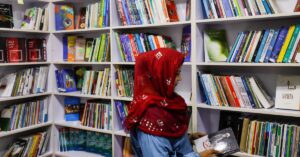
On the eve of the start of the new academic year 1405, Voice of Afghan Women has conducted interviews with a number of girls who have been deprived of education; in these conversations, they spoke of their “feelings of despair, stagnation, and a bleak future.”
Voice of Afghan Women conducted these interviews based on five key questions. The respondents said that the continued closure of schools and universities has consistently left them feeling despair, lack of motivation, sadness, and a sense of stagnation.
Zarmina, a student deprived of attending school, said: “The closure of schools has caused me intense boredom and deep sadness. The days became repetitive and exhausting, my interaction with friends significantly diminished, I experienced a strong sense of loneliness and isolation, and my social connections were also limited.”
Sara, a university student, also said regarding being deprived of education: “The closure of the university means the closing of the gates of my hopes and aspirations. This situation has left me feeling weak and powerless. I had never felt this helpless before. With the closure of the gates of education, I also buried my dreams.”
The interviewees, who included both school students and university students, described the continued closure of girls’ schools and universities for the fifth consecutive year as a “halt to knowledge, learning, and progress” in Afghanistan. They also condemned this policy of hostage-taking by the Taliban regime, calling it contrary to human conscience.
The students and university students who participated in the interviews, in response to a question about the challenges posed by the continued closure of schools and universities, said that a decline in educational levels, along with psychological, social, and economic problems, have been among the most significant consequences of this deprivation.
Hajar, in response to this question, said: “Women feel that they must be lacking compared to men, since the gates of schools are closed to girls beyond the sixth grade. Denying girls access to schools and universities has also confronted society with economic challenges.”
The interviewees also responded to the question, “How do you see your future?” saying that they feel doubt and fear regarding their future and aspirations. One university student said that their future is not “self-chosen” but rather “chosen by others.”
Zarmina also said on this matter: “The future of half of society, which has remained illiterate, is bleak; our country is left with people whose one side is paralyzed.”
In response to the question of how they see their professional future and financial independence, they said that delays or bans on education will undoubtedly destroy job opportunities, undermine women’s financial independence, and turn their dreams into “unattainable dreams.”
Mostura, expressing concern over the current situation, said: “This situation limits women’s professional future, as girls who have not received an education cannot find suitable jobs and are forced into unemployment. Consequently, their financial independence is also lost.”
Some others also say that the continuation of this trend has completely disrupted the management of women’s and girls’ lives, plunging them into a crisis. Mostura emphasizes: “The educational and professional future is uncertain and unclear, and planning has become extremely difficult and challenging.”
One student, who wished to remain anonymous due to security concerns, said, referring to the existing restrictions: “This is not a simple matter; it has had very negative impacts on my life and created many challenges. I cannot attend classes safely, and because of fear of the Taliban, I cannot even leave my home.”
Voice of Afghan Women conducted this interview at a time when, with the start of the new academic year in the country, the doors of schools and universities have once again remained closed to girls.
Many education experts have described this policy of the Taliban regime as a form of hostage-taking and have called for the international community to put pressure on the regime.
Photo credited: Internet