Tales of the Dark Age (No. 105)
By Ali Shadbeig
It was Friday morning when I saw Habib. Holding the hands of Nargis, his nine-year-old daughter, he was walking toward home. Although Nargis wore hearing aids, she had lost more than seventy percent of her hearing. Yet she kept gazing at Kabul’s gray sky and occasionally smiled, as if she could hear something others could not—perhaps the sound of a bird that was no longer there, perhaps the sound of wishes she could not express.
Habib lives in a rented house in one of Kabul’s dusty neighborhoods, in Qala-e Qazi, Dasht-e Barchi. He is a teacher and the father of three deaf daughters. He teaches at a public school.
He now stands before the greatest dilemma of his life: what is he to do with his three deaf daughters? He has no money for their treatment, the education system—collapsed under The Taliban rule—has provided no safe place for them to learn, and no institution has come to this family’s aid.
This report is not merely the story of one family; it is the story of thousands of families whose children live in silence and isolation, deprived not only of the ability to hear but also of their most basic right to education.
Habib Hoseyni, a 38-year-old teacher. His wife, Tahera, is a homemaker, and the family has no other source of income. Their life revolves around their three daughters: Nargis, Zainab, and Asma; all three are deaf.
Habib says: “In 2022, when we first had her hearing tested, Nargis had 80 percent hearing loss in her right ear and 90 percent in her left ear. On the doctor’s recommendation, we got her a hearing aid. This year, the level of hearing loss in both ears has reached 70 percent. Over the four years since she started using a hearing aid, there has been a 20 percent improvement, but it is still not a solution. She cannot hear sound. She cannot speak. She only feels a slight sense when the hearing aid is in her ear, but she shows very little response.”
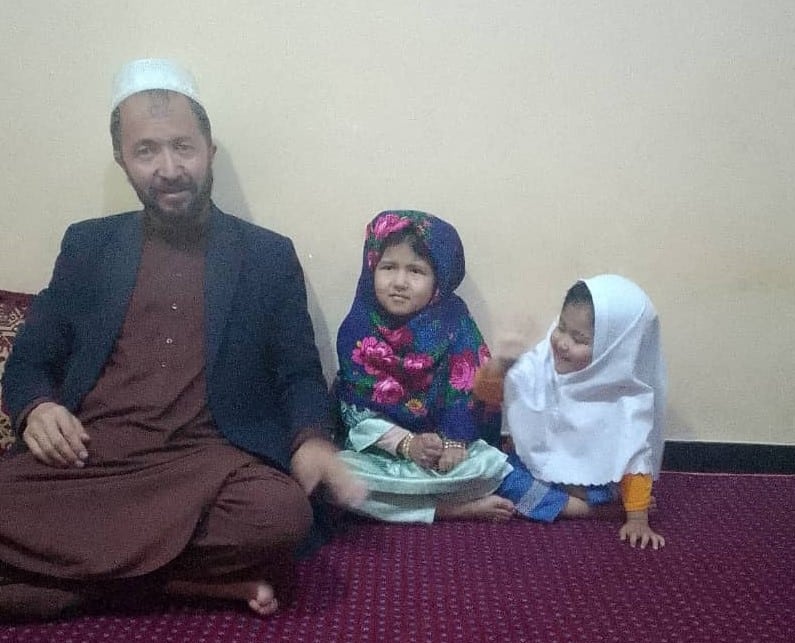
Habib’s second daughter is six-year-old Zainab. She has 65 percent hearing loss in one ear and 60 percent in the other.
Asma, Habib’s youngest daughter, is three years old. She has 60 percent hearing loss in both ears. These girls have never heard any sound and have never spoken a word. They do not know sign language either. Neither their parents know sign language to teach them, nor is there any formal state education available to provide them with professional instruction.
Habib refers to two schools in western Kabul. He says: “There is a school for the deaf in Tank-e-Tel, Barchi. When her mother took Nargis there, the place was in very poor condition and the environment was frightening. Most of the children were much older, so they could not understand, and the teachers also beat them and made strange noises. Nargis became frightened and fell ill for a week. The teachers did not treat the children according to their emotional needs. After that, we never took her there again. We said home is better. At least her life is safe, and no one hits her.”
After that, Habib was forced to send Nargis to a regular school. There, the teachers were kind, but there was no special education for deaf children. Nargis was not learning anything. She was simply no longer being beaten.
There was also a small classroom at Sayyid al-Shuhada School, where Habib took Nargis for ten days last year. These two schools are the only options in western Kabul, and neither has trained teachers nor an appropriate environment for the development and education of deaf children. Habib says: “There may be schools for the deaf in other areas, but they are too far away, and I cannot afford the transportation costs.” There is also no private school for deaf children in Kabul.
In the healthcare sector as well, there is no specialized hospital for deaf patients. Only a few hospitals exist that, alongside other services, have ear, nose, and throat departments. One of them is Sarwari Hospital in the Taimani area of Kabul, where Habib has visited several times and had his daughters undergo hearing tests and brain CT scans. Doctors have said that all three girls need cochlear implants, as hearing aids alone will not be effective. If hearing loss is below 55 percent, a hearing aid can help, but if it is higher than that, it will not produce results.
Another facility is Al-Zahra Hospital. When Habib took his daughters there for treatment, a specialist doctor told him: “It cannot be treated inside the country; it must be taken abroad.” Habib says that when he visited the doctor last week, he was told: “You must get hearing aids for your two younger daughters to prevent their hearing loss from worsening. However, for Nargis, there is no solution except a cochlear implant.” According to estimates by doctors at Sarwari Hospital, each cochlear implant costs around 7,000 US dollars. At the same time, this procedure cannot be performed inside Afghanistan and must be done abroad. If Habib were to get cochlear implants for each of his three daughters, the total cost would be 21,000 US dollars—an amount far beyond the reach of a family living on 13,000 Afghanis a month.
Another problem is that cochlear implantation alone does not produce results. Habib says: “At Sarwari Hospital, I saw a seven-year-old boy named Mehdi from Maidan Wardak. His father said he is deaf and that they had a cochlear implant done a year ago, but there has been no improvement. He said they had just brought him there for hearing therapy. There are specialists here who stimulate the hearing of deaf children and charge 500 Afghanis per hour.”
In addition to cochlear implantation, these girls need to be enrolled in a structured program to receive professional training so that their hearing can be functional within one to two years. Otherwise, without specialized training, the desired outcome will not be achieved. However, there is no structured public program for such targeted education, and the limited speech therapy services available in private hospitals are expensive and beyond Habib’s financial capacity.
Habib has visited many hospitals and consulted numerous doctors. Most doctors have recommended, as a first step, hearing aids for Asma and Zainab, followed by cochlear implantation at a later stage. Habib recalls that last week he met Dr. Sharifa Haq-ju, a subspecialist in ear surgery, skull base surgery, and cochlear implantation. Dr. Haq-ju emphasized that hearing aids are an urgent and essential need for Zainab and Asma, warning that without them, the limited hearing they currently have could deteriorate further. She stressed that action must be taken as soon as possible.
Habib says: “I managed, with great difficulty, to get a pair of hearing aids for Nargis, which cost 50,000 Afghanis. However, the cost of hearing aids for Zainab and Asma is over 100,000 Afghanis, which is beyond my means.” He adds that, in addition to hearing aids, the girls also need professional training. They require specialized educational support to help them develop speech and communication skills. In the next stage, they would need cochlear implants. Completing all these steps requires assistance and cooperation. Habib Hosseini is appealing to humanitarian organizations, charities, and anyone who can help to extend a helping hand.
This situation is not limited to one family. According to a 2019 report by the Asia Foundation (published in 2020), about 13.9 percent of Afghanistan’s population—nearly 4.5 million people—live with severe disabilities. On the other hand, a study conducted in Kabul in 2003 shows that 3.3 percent of children with disabilities in the capital are deaf. If this percentage is extrapolated to the country’s total disabled population, the number of deaf people in Afghanistan is estimated at around 150,000 to 180,000. On the other hand, there are official figures from the Taliban authorities. In 2024, the Ministry of Martyrs and Disabled Affairs announced that a total of 190,000 people with disabilities of all types—including physical, mobility, visual, and hearing impairments—have been registered across the country. This figure is roughly equal to estimates of deaf individuals alone. This stark discrepancy highlights a painful reality: Afghanistan’s system for registering and supporting people with disabilities is deeply flawed. Thousands of deaf children exist whose names no one knows, for whom no schools are built, and whose voices go unheard.
On the other hand, within government programs, there is no national newborn hearing screening program. There are no state-run centers providing affordable or free hearing aids. No university in Afghanistan trains specialized teachers for deaf students, and no budget has been allocated within the Taliban’s education system for students with special needs.This is a crisis with multiple dimensions.
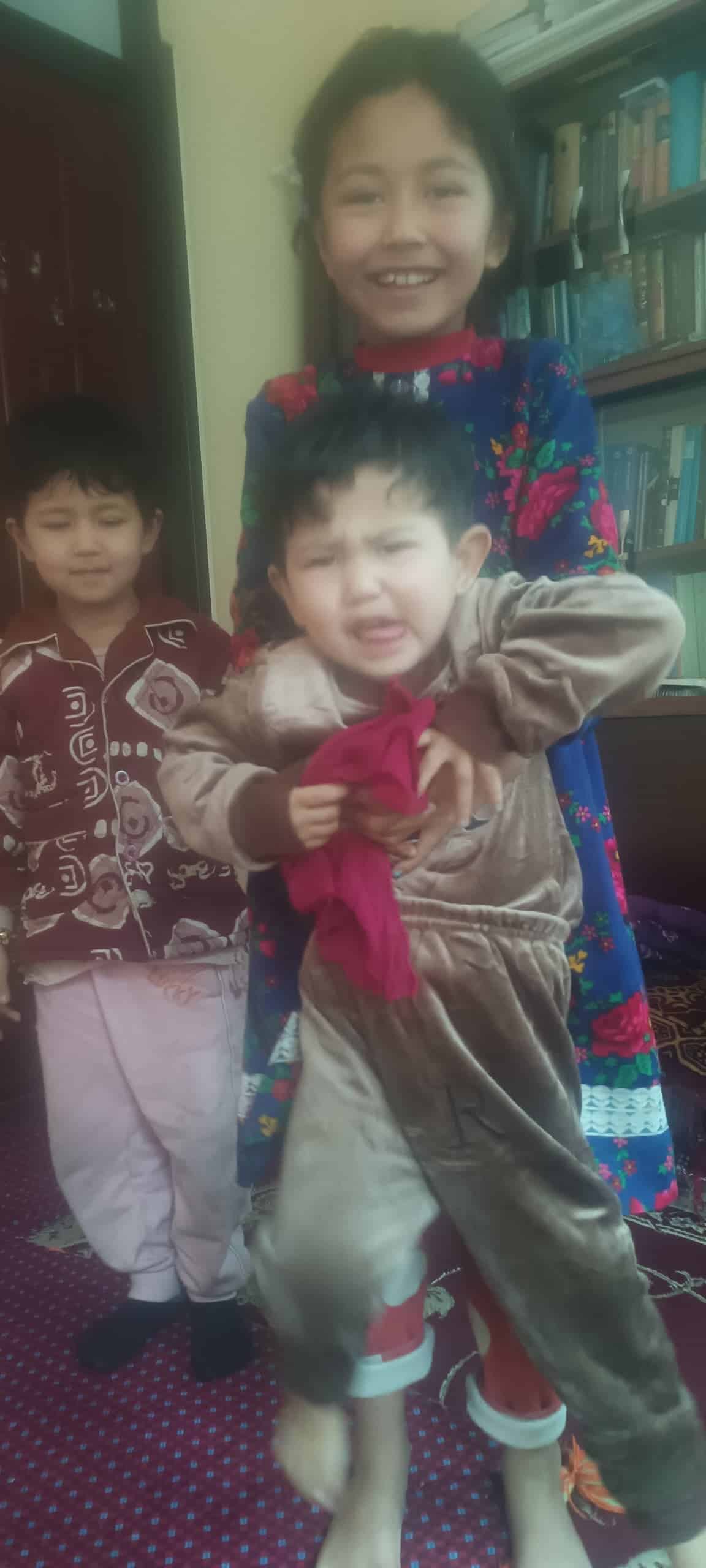
Tahere points to the psychological, social, and family dimensions of this crisis. She says: “Sometimes my daughters move their hands and look at each other. I don’t know what they are saying. Maybe they are saying they love each other. Maybe they are saying they are hungry. Maybe they are asking why they cannot hear our voices. Our home is always filled with silence and stillness, and the pain of this silence has cast a shadow over our lives. It was because of these children that I developed diabetes and high blood pressure. I have been struggling with them for years, and the doctors say it is due to excessive stress.”
On the other hand, the gender dimension of this crisis is stark: deaf girls in Afghanistan are doubly vulnerable. In the Taliban’s education system, which has effectively banned education for girls beyond grade six, a deaf girl has no access to schools with special facilities, is not allowed to continue her education, cannot protest, and the voices of these voiceless children go unheard.
This report is not only the story of Habib and his daughters. It is a reflection of a collapsed system. The education system under Taliban rule is not only broken for ordinary girls, but has also completely failed children with special needs. In a country where the former Constitution (2004) emphasized that the state is obliged to “guarantee the educational rights of citizens with special needs,” there is now neither a legal framework nor oversight. In this collapsed environment, these girls remain silent, isolated, and alone. They have no support or access to justice, no organization or institution to protect them, and no assistance or advocacy campaign has reached them.
Habib says: “As a teacher, I know that education is every child’s right. But my daughters do not even have access to its most basic form. No treatment, no suitable school, no future.”
When I left Habib’s house, my heart felt heavy, and my head was spinning as if I had stepped out of a coppersmith’s workshop. For a long time, Nargis’s smile, Habib’s gaze, and Tahera’s relentless tears stayed with me, shaking something deep inside. Asma, Zainab, and Nargis—these are not just three names. They are worlds of unspoken words, unheard voices, and untrodden paths. They are three separate worlds, three perspectives, and three minds that have not yet found language.
Nargis draws pictures; perhaps one day she will become as influential as Frida Kahlo, one of the most impactful female painters in the history of art. Zainab and Asma love watching cartoons and animated films; perhaps in the future they will direct films like Jennifer Lee, or create animation like Naoko Yamada. All of this depends on how much support, care, and solidarity these girls receive.
This report has been written in the hope that someone, somewhere, will hear these three silences. Perhaps that person is you.