Reporter: Mahya Omid
Nearly a month after the start of the 2026 academic year in Afghanistan, schools have resumed operations under the shadow of a series of structural changes, restrictions, and deep challenges affecting the education system.
According to a number of teachers, what is taking place in Afghanistan’s schools today is not merely a continuation of education, but a gradual transformation in the “spirit of education”—a shift that, they say, has turned schools from vibrant and dynamic learning environments into cold, worn-down, and unmotivated spaces.
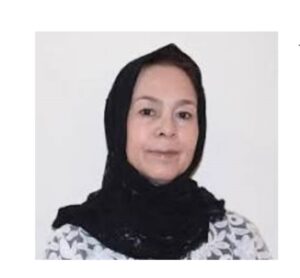
Mahbooba Saeedi, a teacher at a public school in Herat province with 12 years of teaching experience says that recent restrictions are not limited to curriculum content but have also affected students’ morale, teaching methods, and the overall atmosphere of schools.
In an interview with « Afghan Women’s Voice» she says: “I have been a teacher for twelve years and have always lived in an environment of teaching and learning with my students. In the past, schools had a more joyful atmosphere, and students studied with greater enthusiasm, but in recent years this sense of energy and motivation has clearly declined.”
According to the teacher, since the Taliban’s return to power, the education system in schools has undergone significant changes—changes that have affected not only the curriculum, but also the nature of the relationship between teachers and students.
She says:« I used to be an English teacher and taught girls from grades seven to twelve. But now I teach primary classes and I stay with the same class from grade one until they reach grade three, like many other teachers.»
In her view, this change has a dual impact. On the one hand the relationship between teachers and students becomes closer and more profound as they grow together over the years and develop a form of emotional attachment. On the other hand, it reduces the dynamism of the education system and makes the teaching experience more repetitive and uniform.
With a tone mixed with sorrow, she says:« It is very difficult to see the girls I myself taught to read and write being no longer allowed to enter their school.»
Saeedi stresses that alongside the changes in education, teachers’ working conditions have also become increasingly unstable. She adds:« Every year the number of classes and students decreases; as a result at the beginning of the academic year a lottery is held in schools. Some teachers remain in their schools, while others are transferred to nearby schools by draw.»
She adds that this process has not generated much satisfaction among teachers and has affected both their personal and professional lives:« None of the teachers are satisfied with this situation, because it has created instability in our work and lives.»
Alongside job instability, economic problems have also become one of the main concerns for teachers—an issue that, according to them, has directly affected both their quality of life and even their focus on teaching.
She adds:« In the first months after the 2021 political changes, we did not receive any salary for about two and a half months. Later, salaries were reduced, and no clear explanation was provided to teachers.»
According to the teacher, the situation of schools and the education process has also been severely affected by these disruptions, and a shortage of basic resources—especially textbooks—has become a serious and daily challenge.
She says:« At present, textbooks are not sufficiently available. In many classes, several students are forced to share a single book, and some of the books are torn and worn out. When we request books from the education authorities, we are told that none are available.»
She stresses that this problem has gone beyond mere shortages and has turned into a practical deadlock. According to her, even efforts to address it at the school level have yielded no results.
« At the beginning of the 2026 academic year, the school principal asked teachers to collect money for printing textbooks. Local residents also contributed, and funds were gathered. However, when we tried to proceed with printing, the printing press told us that they were not allowed to print the textbooks, as new books were expected to replace them.»
Alongside these challenges, the physical condition of schools is also deteriorating, with worn-out infrastructure and a lack of basic facilities—an issue that teachers say receives little attention and is gradually affecting the quality of the learning environment.
Mahbooba Saeedi says:« Our school building is old and deteriorating, and no serious assistance has been provided by the authorities for its renovation. This situation is worrying, as we witness the gradual erosion of the educational environment every day.»
On the other hand, changes in students’ dress code have also altered the school environment compared to the past and have affected students’ comfort and sense of normal participation in classrooms.
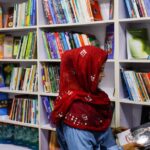
Saeedi says: “Students in grades one to three are required to wear oversized school uniforms and trousers and use headscarves that reach down to their waist. Students in grades four to six are also required to come to school wearing a chador.”
At the same time, direct monitoring of teaching practices and school environments has also increased. Saeedi adds:« From time to time, individuals sent by the Taliban come to the school and monitor teaching methods and the school environment. Their presence creates fear and anxiety among many students, especially children.»
According to the teacher, the consequences of the current situation have gradually begun to appear in students’ morale as well, in some cases leading to a sharp decline in motivation and a sense of indifference toward the future.
She adds:« In previous annual exams, some students, particularly girls in grade six, submitted blank answer sheets. It appears that some of them are deliberately failing, as they have no hope of continuing their education and do not want to be confined to staying at home.»
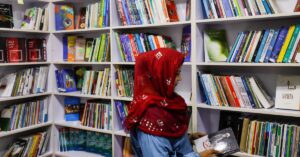
More than four years have passed since the Taliban banned education for girls beyond grade six in Afghanistan. According to international organizations and education activists, this restriction has had wide-ranging and profound consequences for the country’s education system.
According to reports from UNICEF and UNESCO, as a result of Taliban restrictions, around 2.2 million adolescent girls in Afghanistan have been deprived of secondary education—a deprivation that has directly affected the educational prospects and life trajectories of millions of girls.
Photo credited: Internet