Dossier of Afghanistan’s Women Fiction Writers-16
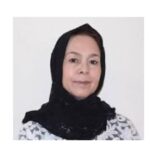
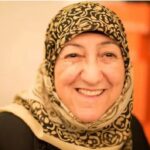
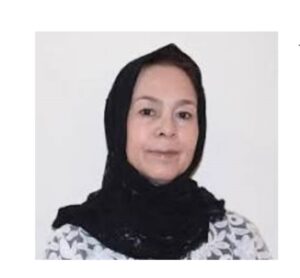
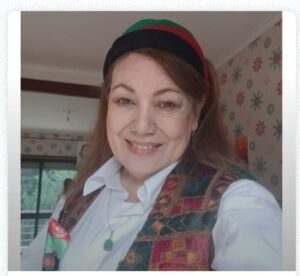
Khaleda Forough, an author, poet, academic, and media personality, is widely recognized as a prominent female literary voice in Afghanistan. Writing predominantly in Persian, her literary works have been translated into English, French, and Norwegian. She discovered her love for poetry during her time at Mariam High School in Kabul. Ever since then, poetry has been a vital part of her artistic expression for more than three decades. She draws inspiration from traditional Persian literature and merges it with modern literary styles in her writing. Her venture into novel writing is a testament to this adaptation.
Flashback I: Literary Portrait
In current literary criticism, the novel is often viewed as a reflection of modernity, offering a broader platform for exploring the intricacies of everyday life. In contrast, poetry is often bound by traditional constraints and may not capture such details as vividly. Forough’s fiction work navigates this landscape precisely. Her initial novel, “The Woman Who Saved Up Life” (Zanī ke Zendegī Pasandāz Mīkard), published in Kabul in 2014 by Zaryab, is a socio-psychological narrative centered around women. It offers an introspective exploration of women’s emotional realms, their deferred aspirations, and their silent resilience as they endure suffering while nurturing hope for the future. Her second novel, “The Way to Nowhere” (Rāh-e Nākojā), published in 2020 by Saeed Publishing, adopts a more philosophical approach, blending mythology with societal reflection.
Despite her foray into fiction, poetry remains the predominant thread in her literary journey. Since her debut collection, “The Uprising of Mitra” (Qiyām-e Mitrā, 1994), published in Kabul, she has produced a substantial body of poetic work. It includes various collections such as “A Window onto the Season of Lightning” (Panjareh-ī bar Fasl-e Sā‘eqah, 1999), “The Fate of the Hands that illuminate a generation” (Sarnevesht-e Dast-hā-ye Nasl-e Fānūs, 2000), “Passing Through the Century of Cain” (Obūr az Qarn-e Qābīl, 2000), “In the Streets of Slumber and Memory” (Dar Khiyābān-hā-ye Khāb o Khātere, 2001), “And Always Five in the Afternoon” (Va Hamīshe Panj Asr, 2007), “The Empty Alleys of the World” (Kūcheh-hā-ye Khālī-ye Donyā, 2009), “The Cemetery Is an Endless Novel” (Romān-e Pāyān-nāazīrī ast Gūrastān, 2009), “My Tomorrow Happens in Yesterday” (Fardā-ye Man Etefāq Mīoftad dar Dīrūz, 2012), “The Uprising of Mitra and Other Dreams” (Qiyām-e Mitrā va Chand Royā-ye Dīgar, 2012), “Being a holy Mary Is Worth Nothing” (Maryam-e Moqaddas Būdanat Yak Jav Namī-arzad, 2017), and most recently, “The Moon Escaping the Night” (Māh-e Gorīzān az Shab, 2024), released in both Persian and Norwegian in Norway. The chronology of these works reveals a consistent, often remarkably prolific literary output.
In addition to her creative endeavors, Forough has made significant contributions to literary academia. She attained her doctoral degree from Tajik State University in Dushanbe, where she defended a thesis titled “The Contemporary Ghazal of Afghanistan.” This academic work was subsequently published as “Unceasing Steps: Contemporary Persian-Dari Poetry” (Gām-e Bī-Tavaqof: She’r-e Mo‘āser-e Pārsī-ye Darī). In 2019, she also curated and published “Bitter Nectar” (Shahd-e Talkh), a collection of poems by Makhfi Badakhshi.
Flashback II: Media Activity
Furthermore, her professional journey encompasses substantial involvement in the media sphere. Following her university graduation, she joined Radio Afghanistan, where she oversaw literary programs from 1993 to 1996. After the Taliban’s ascent to power in 1996, she was compelled to seek refuge in Pakistan. During this period, cities like Peshawar and Quetta emerged as vital hubs of Afghanistani cultural activities in exile.
In this role, Forough served as editor of the literary, artistic, and cultural magazine Sadaf, a publication that became part of Afghanistan’s literature in exile and featured works by prominent Afghanistani writers and poets.
After the fall of the Taliban in 2001, she returned to Afghanistan and resumed her media activities in 2004. One of her most notable contributions was hosting the cultural and literary program “The Lofty Palace of Darī Pearls” (Kākh-e Boland-e Dorr-e Darī) on Tolo Television during the 2000s and 2010s. Her media career spans nearly two decades and reflects a sustained engagement with cultural production and public discourse.
Flashback III: Teaching
In addition to her literary and media work, teaching has been a central part of her professional life. She served as a lecturer at the Faculty of Literature at Kabul University, where she contributed to the intellectual development of a new generation of students. After returning to Kabul, she joined the Department of Persian Language and Literature and established her academic career alongside her other activities.
Flashback IV: Education
Khaleda Forough is among the highly educated women of Afghanistan. She completed her bachelor’s and master’s degrees in Persian-Dari literature from Kabul University. She later pursued her doctoral studies at Tajik State University in Dushanbe, where she completed her research on contemporary Afghan ghazal.
Flashback V: Migration
Migration has played a defining role in her life. She belongs to a generation shaped by repeated displacement due to political upheaval. Her first migration occurred in 1996 following the Taliban takeover, when many intellectuals and cultural figures were forced into exile, and she settled in Pakistan. Her second migration took place in 2021 after the fall of the Afghan Republican Government. This time, she moved beyond the region and eventually settled in Norway, where she currently resides.
Flashback VI: Beginnings
Born in 1972 during the final years of the Afghan monarchy, Khaleda Forough’s life has unfolded alongside major political transformations. From monarchy to conflict, regime change, and repeated waves of migration, these historical shifts have profoundly shaped her personal and literary trajectory. Today, from a distant homeland, she continues to look toward a future in which new possibilities may emerge for Afghanistan and its people.