Dossier of Afghanistan’s Women Fiction Writers-15
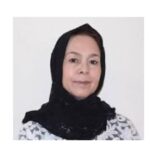
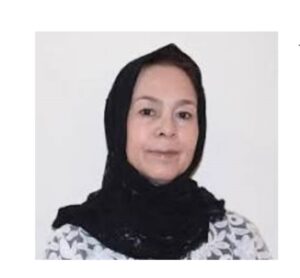
In a small office on the outskirts of Vienna, where the formal sheen of diplomacy has long since thinned into something quieter and more improvised, Manizha Bakhtari continues to sign documents for a country that no longer stands in the form she once served. The room is modest, sustained in part by the Afghan diaspora. Files are stacked with care. A phone rings, then rings again.
At some point, a question inevitably returns, sometimes from journalists, sometimes from visitors, sometimes from across a line that stretches back to Kabul.
Do you still consider yourself an ambassador?
She answers without hesitation. She does not recognize the Taliban, she says. Their authority does not extend to her. The letter dismissing her was, in her words, nothing more than a piece of paper.
The work continues.
lecturer, a civil activist, a journalist, and a diplomat. Each of these roles belongs to a different institutional moment, yet in her life, they overlap, forming something less linear and more continuous. In recent years, she has come to occupy a position that did not previously exist. She represents a country that has undergone collapse while refusing to yield that representation to those she does not accept as legitimate.
Her presence in international media has turned her into a recognizable figure, a voice that carries beyond borders. The phrase often used to describe her, a diplomat without a country, suggests absence. In practice, her life points toward something else. It suggests persistence, a form of continuity that survives beyond the structures that once sustained it.
She has written for years. She has taught. She has lived through crisis, through exile, through the slow and sudden transformations of political life. Now she works from a smaller place, holding together what remains of a diplomatic role, not through recognition but through a refusal to abandon it. There is an old Persian saying that one woman may stand in place of a hundred thousand. In her case, the phrase feels earned.
Writing
As a writer, Bakhtari has published eight books, four works of fiction, and four academic and research studies. Her short story collection Three Fairies, published in the winter of 2007 by Parnian, gathers eight stories centered on the lives of Afghan women.
In addition to this collection, she has written three novels. Her first, The Four Daughters of Zoroaster, is set in an imagined place called Zoroastrabad. It traces the lives of five generations of women and offers a quietly insistent critique of the condition of women during the Taliban period. The novel follows four daughters whose lives unfold into five distinct destinies. The characters speak openly about love and sexuality without censorship. Critics have described the work as a call to awakening and protest among women.
Her second novel, Sweet Ashes, published on August 30, 2024, by LULU, is 284 pages and tells the story of the collapse of an ancient civilization and the struggle of its people, especially young women, in a place called Zarwan.
Her most recent novel, A Duff for Golsa, published in 2025 by Parnian, spans six chapters and 310 pages. It narrates the lives of three generations of women over the course of fifty years, tracing their experiences from restriction to war and violence.
Taken together, her fiction centers on women and their lived realities, shaped by social conditions, history, and questions of identity. Much of her work draws on elements associated with magical realism, though its emotional grounding remains anchored in lived experience.
Alongside her literary writing, she has produced four academic works. The Enchanting World of News examines reporting and serves as a university textbook. Ethics and Law in Journalism addresses professional standards and is taught at Kabul University. Her research, Honey of Chewing and Poison of Laughter, explores the contemporary history of satire in Afghanistan. In Literary Journalism and 93 Years of Media and Law, she examines the evolution of media and its legal frameworks. In addition, she has published numerous articles on literature and journalism in Sadaf magazine and 8 Sobh newspaper.
Education
Bakhtari belongs to a generation shaped by Afghanistan’s pre-collapse educational system. She completed her primary and secondary education in Kabul, beginning around 1978 and finishing in the early 1990s. She entered Kabul University in 1987 and graduated with a degree in journalism in 1991. She later obtained her master’s degree from the same institution.
Journalism
Her professional life began in journalism. She served as editor of the quarterly cultural and literary magazine Parnian, a publication devoted to literature and culture. After 2001, she worked as a columnist for newspapers and remained active in the press. Through her writing and publications, she contributed to the development and reconstruction of Afghanistan’s media system.
Civil and Political Life
She later moved into civil and political work. For several years, she worked with the Cooperation Center for Afghanistan on media development and human rights. In 2006, she joined the Ministry of Foreign Affairs. Between 2006 and 2009, she served as the foreign minister’s chief of staff. From 2009 to 2016, she was appointed ambassador to Norway, Sweden, Denmark, Iceland, and Finland. In the winter of 2020, seven months before the republic’s collapse, she was appointed Afghanistan’s ambassador to Austria.
The defining moment came soon after. The Taliban sent her a letter of dismissal. She responded publicly, stating that she did not recognize them. The letter, she said, meant nothing to her. With the withdrawal of financial support, she left the embassy building. With the help of Afghan migrants, she set up a small office on the outskirts of the city. From there, she continues to provide consular services. The situation has become a form of diplomatic resistance, a quiet but determined refusal to concede legitimacy.
Her story has drawn international attention. The documentary The Last Ambassador: An Afghan Diplomat Without a Country, directed by Austrian filmmaker Natalie Halla, portrays her as a figure standing between two worlds, representing a collapsed government while confronting a regime that lacks both domestic and international legitimacy. She remains Afghanistan’s last ambassador without a state.
Migration
Migration has shaped her life repeatedly. She belongs to a generation marked by repeated displacement. Her first migration took place during the Taliban’s initial rule, when she left Afghanistan with her family, including her father, Wasif Bakhtari, one of the country’s most prominent poets. They spent four difficult years in Pakistan.
Later, between 2018 and 2020, she lived in Vancouver, Canada. This period was not only defined by exile. She worked with various institutions on policies addressing homelessness, poverty, and addiction.
Her third experience of displacement came after the return of the Taliban in 2021. At that time, she was serving as an ambassador in Austria. The political shift left her effectively in exile once again.
Teaching
Since 2002, she has taught as a part-time lecturer at the Faculty of Journalism at Kabul University. Teaching remains central to her life. In response to restrictions imposed on women and girls under Taliban rule, she has supported initiatives that provide education through informal schools and online platforms, offering opportunities to those denied access to formal education.
The First Beginning
Manizha Bakhtari was born on September 15, 1972, in Kabul, into a family deeply rooted in literature. Her father, Wasif Bakhtari, named her after a character from the Shahnameh. The name carries echoes of myth and courage. Yet this Manizha was born not in legend, but in a city already moving toward upheaval.
What followed was not the life of a mythical heroine, but something more difficult and more concrete;a life shaped by history, by loss, by persistence. And yet there is something in the name that remains fitting. Like her namesake, she is not simply shaped by circumstances. She acts within them.
The aim of Afghanistan Women’s Voice in presenting figures such as Bakhtari is not only to recount lives but to highlight women who shape their own circumstances. To tell these stories is to bring forward voices that insist on being heard.
In Bakhtari’s case, that voice continues.
Photo credited: Internet