Reporter: Mahya Omid
Before Afghanistan fell, Yeganeh saw herself as a future graphic design student. Maryam was only a few steps away from wearing the white coat of a doctor, and Homayra imagined a future where her children would study in schools and universities. At that time, going to school, attending university, and dreaming about the future were a normal part of life for thousands of Afghan girls and their families.
Today, five years after the Taliban returned to power, one of them still carries the pain of losing her chance to attend university. Another was forced to leave her dream of becoming a doctor unfinished, while a mother now watches her children’s hopes quietly unfold within the walls of her home. Although the stories of these three women begin in different lives, they all lead to the same point: five years that changed the lives of thousands of Afghan women and their families.
In 2022, Yeganeh took the Kankor, Afghanistan’s national university entrance exam, and was accepted into a graphic design program. It was meant to be the beginning of her university life. But only a few months later, when universities were closed to women, that acceptance never led to sitting in a classroom, meeting her classmates, or beginning life as a university student.
Yeganeh, 23, says:« Back then, I was looking for things to buy for university, not thinking that four years later I would still be talking about a university I never even got to see for a single day.»
After the universities were closed to women, Yeganeh’s days were no longer filled with study plans, exam preparations or the dream of becoming a university student. She says that during the first few months, she spent most of her time at home and could not accept that her success in the Kankor would never lead to the start of her university life. More than anything else, she was left wondering where she should begin rebuilding her life.
She adds:« None of us had the chance to study the subject we loved or even spend a moment living the future we had dreamed of. The Taliban took something from everyone. From me, they took my right to go to university.»
However, Yeganeh decided to find another way to continue on the path she loved. Little by little, she returned to painting, an art she had always loved and this time it became a way for her to move forward in life. Today, she teaches painting; a path that, although it has not replaced university for her, has not allowed her dream to completely fade away.
She says:« Over these years, many girls have turned to reading, writing, painting and other forms of art. No matter how much the Taliban try to create barriers, women will continue to find ways to move forward. Five years ago, I was afraid of speaking in front of others but today I teach and I stand on my own feet.»
Despite this, her daily life is still shaped by the restrictions that have continued to expand with each passing day over the past five years.
Yeganeh says:« Every day, we face a new restriction. Whenever I leave the house, the first thing I carry with me is fear. I am constantly worried that I might face problems because of my hijab or for any other reason. In this hot weather, wearing a chador feels like torture.»
When I ask her about the future, unlike the way she describes the past five years she speaks of hope؛ a hope that, in her words, comes from the experiences of this very generation.
« The next generation will grow up more aware and better informed because their mothers are women who have experienced the difficult years under the Taliban. We will not allow our children to face the same fate that we did.»
The closure of schools and universities did not only destroy girls’ dreams؛ it also left unfinished the hopes that families had built for their children’s future over many years.
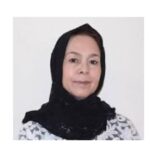
Homayra, 50, and her husband never had the opportunity to learn how to read and write, but they always hoped that their children would achieve the dreams they themselves never had the chance to experience. Five years ago, her son was in the 10th grade and her daughter was in the 8th grade. Both dreamed of becoming doctors and often talked about the day they would work together.
She says:« My son always used to say, ‘My sister and I will both become doctors and we will work together. My whole life, my greatest wish was to see my daughter and son wearing white coats.»
However, with the closure of girls’ schools, that shared dream remained unfinished. Her daughter was unable to continue her education and her son, although he was still allowed to continue studying, no longer wanted to go to school.
Homayra says:« My son finished the 10th grade that same year, but after that, he never went back to school. I asked him several times to continue. I would tell him,« You do not have any obstacles. Why do you not want to continue your studies?» But he always had the same answer. He would say:« How can I go to school and study when my sister is sitting at home, crying because she misses school ?»
Today, her daughter studies English online from home and her son has been learning tailoring for nearly two years. Humaira says her only hope now is her younger son, who is still attending school, but she is always worried that one day he too may leave his education unfinished.
She says:« All my children’s dreams were destroyed because of a few Taliban members. I hope that no mother in this country ever has to experience the pain of seeing her child’s dreams disappear.»
While Yeganeh never had the chance to begin her university education, and Homayra’s children’s dreams were stopped before they could reach university, Maryam belongs to a generation that was only a few steps away from completing university.
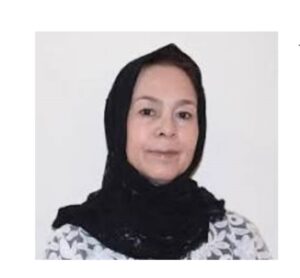
Four years ago, Maryam was a fifth-year medical student and one of the top students at her university. She thought that within one or two years, she would complete her studies, become a doctor and start working. However, after the Taliban returned to power and universities were closed to women, her educational journey, like that of thousands of other female students, was also brought to a halt.
Maryam, 28, says:« I thought that within one or two years, I would finish my studies, become a doctor, and start working. But everything changed. I was someone who had never even thought about marriage, yet I got married last year and now I have a seven-month-old child.»
For Maryam, losing the chance to continue university was not only about leaving her studies unfinished؛ according to her, it also affected the identity she had worked for years to build.
She says:« Before, when people called me Doctor, I felt a deep sense of happiness. I was happy؛ especially on campus, we used to call each other Doctor, and our professors also addressed us that way. But after being deprived of university, now when someone calls me Doctor, I feel upset. I think they are making fun of me.»
She says that the situation for women in Afghanistan is becoming more difficult every day, and many women have limited their presence in society to avoid problems.
Maryam adds:« Day by day, the situation for women is getting worse. In Herat, restrictions are greater compared to many other provinces. I try not to go out of the house too often so that I do not face problems related to hijab or any other issue.»
Maryam says her experience is not only the story of one person’s life. Thousands of other girls have also been forced to change the path of their lives during these years. However, Maryam still hopes that one day women in Afghanistan will be able to choose their own paths of education and life without any barriers.
She says:« The only thing I do is pray day and night for a better future for all the women in my country; I hope that one day nothing will stand in the way of women’s progress.»
On August 15, 2021, the Taliban returned to power and only a few months later, restrictions on the lives of women and girls began. First, the doors of schools were closed to girls above the sixth grade and in December 2022, girls were also banned from continuing their education at universities. After that, restrictions expanded to other areas of women’s lives, from work and social participation to movement, clothing and access to many services. Five years later, the impact of these decisions is not only seen in statistics and official orders؛ it can also be seen in the lives of women whose futures have been changed.
Photo credited: Internet