Afghanistan’s Women Storytellers File – 21
Researcher: Qawm Shahi
Translator: Shekib Jaghori
Note: «Writing» is a form of rebellion against a harsh and barren reality, silence and stillness. Nawal Saadawi, the Egyptian writer and feminist, repeatedly emphasized that the roots of her writing lay in anger and protest, rather than in peace and stillness. In an interview, she said:« From childhood, writing for me was a kind of challenge, rejection and response to the way of thinking that dominated society.»
It was this same Saadawi who, when a teacher at school crossed her mother’s name out of her notebook and said:« Cross out your mother’s name؛ write your father’s and grandfather’s names» began writing in protest and insisted on writing her mother’s name.
For Afghan women writers and storytellers, writing and storytelling carry the same meaning as Nawal Saadawi’s story: writing as an act of protest, writing as a declaration of existence and a declaration of position against the existing order and structure.
Therefore, Voice of Afghan Women, in its series of articles titled« Afghanistan’s Women Storytellers File,» is searching for the rebellious women of Afghanistan who have disrupted the existing order and conventions through their writing and whose every word carries the current of life. This is even more true in the present period, under the rule of the Taliban Emirate؛ women in the country now need« writing» more than ever as a form of« declaring their existence,» as a protest against the existence of the« evil group.»
This series of articles has covered 20 women storytellers, from the beginning of the development of storytelling to the present day, starting with the first woman storyteller from the early 1300s Solar Hijri and following the historical calendar and chronological order. We have now reached the end of the 1350s Solar Hijri decade and in this issue, we turn to the story of another Afghan woman writer: Pohanyar Nafisa Khushnasib Ghaznfar.
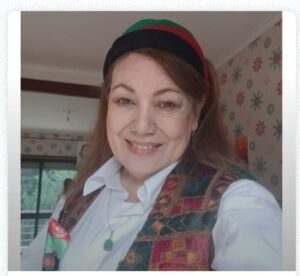
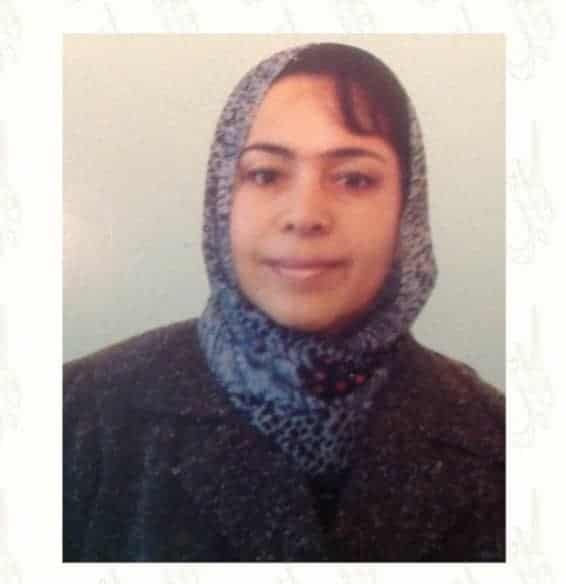
Nafisa Khushnasib Ghaznfar is a storyteller, poet, humor writer and university lecturer. She is a woman whose books on poetry, ghazals, psychology and children’s poetry and stories have been published to date, which we will discuss in her bibliography in this article. In addition to having her own collections published, she has also worked and written for the Kabul Times newspaper, Bakhtar News Agency, Mirmon magazine and Sadaf over many years.
Story Writing
Nafisa Khushnasib Ghaznfar, while also working in humor writing, poetry and teaching, is a storyteller in the field of children’s and young adult literature. The following fictional works by her have been published and these two works also represent her work as a storyteller:
• The novel Aliens in Kabul, written for young readers, was printed and published in Persian and Turkish in 1398 by Sobh-e Omid Publishing House in Kabul.
• The children’s story collection The Last Prophet, published in Kabul in 1390. The name of the publisher is unknown.
Poetry
Nafisa Khushnasib Ghaznfar’s literary works are mainly in the field of poetry. The following works by her have been published to date.
Children’s Poetry and Songs
• The joint collection of children’s poems and songs titled Btab Btab Aftab (Shine, Shine, Sun), published in 1383 by the Afghanistan Cooperation Center;
• The collection of children’s poems and songs titled Kaman-e Rustam, published in 1389 in Kabul; the publisher is unknown;
• The children’s poem Khorshid (Sun), published in 1396; the year and place of publication are otherwise unknown;
• The children’s poem Tavalod-e Parwana (The Butterfly’s Birth)؛ the publisher and year of publication are unknown؛
• The children’s poem Paranda-ye Kuchak (The Little Bird); the publisher and year of publication are unknown;
• The poetry collection Dar Bastar-e Setara (In the Cradle of the Stars)؛ the publisher and year of publication are unknown;
• The poetry collection Mahak, which was printed and published in 1398. According to sources, this collection includes several children’s books.
Adult Poetry:
• The poetry collection Daricha-ye Del (The Window of the Heart), containing 159 poems, published in 1388; the publisher and place of publication are unknown;
• The poetry collection Nilofar-e Abi (Blue Water Lily), for adults, published in 1396 in Kabul;
• The poem Khayesh-e Darya Shodan (The Desire to Become the Sea), containing 72 poems, published in 1396 in Kabul; the publisher is unknown;
• The poetry collection Az Sajda Ta Meraj (From Prostration to Ascension), published in 1397 in Kabul; the publisher is unknown;
• The poetry collection Melodi-ye Darya (Melody of the Sea), published in 1397;
• A collection of quatrains and couplets; the publisher and place of publication are unknown;
• The poetry collection Sad Ghazal (One Hundred Ghazals), published in 1397; the publisher and place of publication are unknown.
Humor
• The humor collection Maraz-e Bi-Etemadi (The Disease of Distrust); the year of publication and publisher are unknown;
• The humor collection Khajalat Bekeshid (Be Ashamed), published in the spring of 1388; the publisher and place of publication are unknown.
Research
Sources have stated that although Nafisa Khushnasib does not have formal education in psychology, she appears to have written and published books on psychology, either out of personal interest or perhaps out of necessity. It is not clear exactly how much academic or research value these books hold, and we will not go into that discussion here. In any case, whether her books on psychology were based on her personal reading and interest or on something else, they are as follows: – The psychology collection Daricha-i Be-Suy-e Salamat-e Rawani (A Window Toward Mental Health); the year of publication, publisher, and place of publication are unknown;
• The humor collection Dost-e Baten (Inner Friend), 137 pages, published in 1388; the place of publication and publisher are unknown.
Education
Sources provide little information about the exact details of Nafisa Khushnasib Ghaznfar’s years of education. According to the available sources, Nafisa Khushnasib Ghaznfar completed her primary and secondary education in the cities of Mazar-e-Sharif and Kabul. She completed her primary education at Rakhshana Balkhi and Sultan Razia schools in Mazar-e-Sharif, and her secondary education at Surya High School in Kabul. She holds a bachelor’s degree in journalism and graduated with a bachelor’s degree from the Faculty of Journalism at Kabul University.
In the current situation, where the Taliban Emirate has restricted educational opportunities, travel, and women’s and girls’ access to work and employment, Nafisa Khushnasib is one of the most fortunate women in Afghanistan. Although Afghan women have lived through hardship throughout the history of the country, the dark period of the Taliban Emirate has not been experienced in the same way in any other period of the country’s or the world’s history.
Teaching
In addition to writing, Nafisa Khushnasib Ghaznfar also has teaching experience at the university level. According to sources, she taught at the Faculty of Journalism at Balkh University from 1374 to 1384, a period of ten years.
Personal Biography
Nafisa Khushnasib Ghaznfar’s date of birth, like that of many Afghan biographies, remains vague, uncertain and unclear. For example, one account gives her date of birth as the winter of 1356 in the city of Mazar-e-Sharif, while another states that she was born in 1348 in Mazar-e-Sharif. There are even two accounts regarding her birthplace: the city of Mazar-e-Sharif in Balkh Province and the city of Maymana in Faryab Province. This is what the lives and biographies of Afghans are like: marked by confusion and a lack of reliable information. This is despite the fact that Nafisa Khushnasib Ghaznfar is still alive and there is still time to clarify these details. So why do we not have accurate information about her?
The question of why there is no accurate and reliable information about prominent figures in Afghanistan has always occupied the mind of the writer of these lines. This shows a lack of sufficient work in developing a continuous national bibliographic infrastructure. In addition, Afghanistan’s written works have not yet been documented according to bibliographic standards.
Fortunately, the bibliographic information currently available on Afghanistan’s written works is largely due to the Afghanistan Centre at Kabul University (ACKU) and the late Nancy Dupree, who took the initiative to establish digital resource infrastructure in Afghanistan. Otherwise, even this limited amount of information would not have existed.
Remembering the efforts and legacy of Nancy Dupree is a metaphor for challenging the Taliban Emirate. It is a metaphor because a woman from the other side of the world spent years living alongside the people of Afghanistan, secured funding, and built a very rich archive and information database for Afghanistan.
But unfortunately, everything suddenly changed when the Taliban Emirate’s terrorist group disrupted the situation and pushed Afghanistan back into the depths of history. Women—both Afghan women and women from other countries who had come to Afghanistan to serve and contribute—were pushed out of the workplace and public life.
The situation in Afghanistan has reached such a point that all we can do is look back to the distant past and say: a certain woman from a certain country once came to Afghanistan and accomplished such a great achievement. Or we remember that an Afghan woman had completed primary school, high school, and university, and had even taught at a university.All of these memories point to one thing: the captivity of the people of Afghanistan and Afghanistan itself at the hands of a criminal, bloodthirsty, backward-looking, and reactionary group known as the Taliban. That is all.
As I mentioned at the beginning of this biography, Nawal Saadawi said in an interview with Al-Quds:« When the teacher crossed her mother’s name out of her notebook and said,« Cross out your mother’s name; write your father’s and grandfather’s names instead,»» the Taliban Emirate in Afghanistan has, for now, crossed out women’s names, identities, and gender, as well as their entire existence. All that remains is a full-scale uprising by the women of the country against this destruction, until dawn finally breaks.