Revisiting the Lives of Influential Afghan Women –2
Writer: Qawm shahi
Translator: Shikeb Jaghori
Some lives leave their marks quietly.
No slogans. No spectacle. No search for attention.
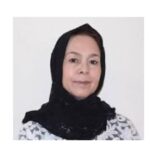
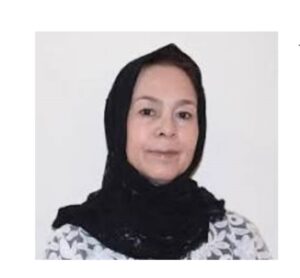
For more than three decades, Dr. Sakina Yaqoobi has pursued a single idea with uncommon persistence: education can alter the course of a society.
An educator, humanitarian, and advocate for women’s rights, she is best known as the founder and chief executive of the Afghan Institute of Learning, an organization that has worked for decades to expand access to education for girls and women across Afghanistan. Few individuals have played a larger role in the effort.
This issue of The Afghanistan Women’s Voice looks at the life and work of one of the country’s most influential educational figures.
Telling the stories of women such as Yaqoobi also means telling another story about Afghanistan itself. It is the story of women who built institutions, created opportunities, and continued working through years of war, displacement, and political upheaval.
At a time when women have been pushed out of much of public life under Taliban rule, documenting the achievements of Afghan women takes on added urgency. The purpose is simple: to recognize what Afghanistani women have accomplished and what they remain capable of accomplishing when given a chance.
Education as a Path to Change
Sakina Yaqoobi occupies a singular place in contemporary history of Afghanistan.
Her life’s work has been grounded in the belief that education offers a path forward, even when political realities seem immovable and doors appear closed.
In 1992, she left academic life in the United States and returned to a country torn apart by conflict.
To many, this decision would have appeared incomprehensible. Afghanistan was entering one of the most turbulent periods in its modern history. Institutions were collapsing. Violence was spreading. Much of the country’s future seemed uncertain.
The same year, following the fall of President Mohammad Najibullah’s government and the outbreak of civil war, Yaqoobi traveled to Peshawar, Pakistan.
There, she joined the International Rescue Committee and initially oversaw a teacher-training program before taking on broader coordinating responsibilities in Afghan refugee camps.
Her work soon focused on training female teachers in the field. This experience shaped the course of her life.
Working among displaced Afghan families, she became convinced that education was not merely one of many needs. It was the foundation upon which everything else depended on.
For four years, she worked in education, teacher preparation, and health-related programs serving refugee communities. The money began to disappear.
The International Rescue Committee scaled back its operations in Peshawar. Schools faced closure. Programs that had taken years to build suddenly stood on fragile ground.
This period was difficult. Advances that seemed secure now appeared to be at risk. Yaqoobi chose not to walk away from this situation.
She stayed.
The question before her was straightforward: where could real change begin. She repeatedly returned to the same answer. Education.
She began sketching what she hoped Afghanistan might become and asked herself what would be required to reach that future. Every path led back to the classroom.
By 1995, after four years of work in the refugee camps, she acted on this conviction. Using $20,000 of her own money, she founded the Afghan Institute of Learning (AIL), a nongovernmental organization devoted to education, literacy, health care, vocational training, and women’s advancement.
The decision carried a risk. She already knew that the needs were immense. Teachers required training. Existing schools struggled to survive. Refugee communities lacked resources and stability.
Shortly after founding AIL, she returned to the United States and spent two months searching for financial support. Years later, reflecting on what she saw during her first visits to Afghan refugee camps, she recalled the following:
“When I saw women and children who had no future, the thing that changed my life, gave me strength and introduced me to the world was education.”
At that time, her ambitions struck many people as unrealistic. An Afghanistani woman setting out to reshape communities through education did not fit the expectations. She continued anyway. Progress came slowly. Afghanistan changed again.
In 1996, the Taliban captured large parts of the country, including Kabul, and established their first government in Afghanistan.
For many Afghans, a new period of hardship had begun. Yaqoobi and her colleagues refused to abandon their work. In 1997, they expanded it.
As the Taliban barred girls from education, AIL began building educational and health networks inside Afghanistan.
The effort began in Herat, Yaqoobi’s birthplace. Because education for women and girls was prohibited, many activities were conducted in secret. These underground networks later spread beyond Herat to Kabul, Jalalabad, and other provinces. This was the beginning of Yaqoobi’s educational work in the country.
Under Taliban rule, AIL established approximately 80 clandestine home schools serving nearly three thousand girls.
The organization trained thousands of female teachers, distributed books and educational materials, and maintained classes from early morning to late afternoon. When the first Taliban government collapsed in 2001, the work did not cease.
By 2002, Yaqoobi was overseeing 80 home schools in urban and rural communities. Approximately 3, 000 girls in four provinces were enrolled.
After the fall of the Taliban, she formally opened offices in Afghanistan and broadened the organization’s activities. Education remained the central focus.
Women between the ages of six and sixty participated in the programs. Yaqoobi even turned her own home into office space for the organization.
Over time, AIL expanded its network of schools, learning centers, clinics, and community programs across Afghanistan and Pakistan.
Healthcare became another major part of the mission. The organization launched mobile clinics and extended medical services to underserved communities.
In an interview with the Berkeley Center, Yaqoobi stated that AIL had trained approximately 20,000 teachers.
Its operations were later expanded across Kabul and Herat.
One remark has come to stand as a distillation of her philosophy:
“Every school we build is a torch. It burns away the shadows of ignorance and tears down the walls of darkness.”
Statistics alone do not fully capture the requirements of the work. Creating educational opportunities for thousands of Afghan children, many of whom studied in secret during Taliban rule, demanded persistence, organization, and a willingness to continue when doing so carried real risks.
Part 2: Building Schools, Building Communities
Yaqoobi’s work eventually stretched far beyond education.
The communities she served faced needs that could not be separated into neat categories. A child struggling to attend school might also lack access to medical care. A mother unable to reach a clinic was often raising children whose education had already been disrupted by poverty, displacement, or war.
The Afghan Institute of Learning evolved with these realities. By 2015, four health clinics operated under AIL’s supervision in Kabul and Herat provided free medical care to patients.
Among them was the Sakina Yaqoobi Mother and Child Hospital in Herat, which became one of the organization’s most visible health initiatives.
An official associated with AIL’s educational programs described that the conditions in remote districts where doctors and trained health workers were scarce:
“In remote areas and districts where health workers are absent, our staff have managed to save patients from what would otherwise have been certain death.”
Treating patients was only part of the mission. Training future medical workers became another priority.
By 2024, more than 100 trainees graduated from the Mother and Child Hospital in Herat, adding to the pool of health professionals serving Afghanistani communities.
Humanitarian Efforts Beyond the Classroom
Education remained the foundation of the organization, yet its activities increasingly touched many areas of daily life.
Her work extended beyond schools and clinics, reaching communities across different parts of Afghanistan through a wide range of humanitarian initiatives.
Among them were assistance programs for a residential care home for older people in Herat in 2023, the construction of 12 wells providing safe drinking water in several provinces in 2024, and relief efforts for families affected by flooding in the Doshi district and parts of Baghlan Province.
The aid included food, school supplies, and educational materials.
Such projects reflected a philosophy visible throughout Yaqoobi’s work: communities rarely need only one thing. A school alone cannot solve all problems. Neither can a clinic.
AIL was built around a simple reality: communities rarely face a single problem. Education, health care, poverty and displacement are often intertwined.
Expanding the Reach of Learning
Over time, Yaqoobi’s work expanded into areas that extended well beyond traditional schooling. Over time, AIL grew into a network of educational, social and community initiatives that stretched well beyond traditional schooling.
Among them are Meraj Virtual University, Meraj Global Television, Meraj Radio, and the AIL Youth Club, whose fourth cycle will conclude in 2025 with programs focused on youth leadership and civic engagement.
The organization also trained nurses and health workers serving women in rural communities, conducted seminars and workshops for women and girls, established foreign-language centers, operated kindergartens, supported orphan care programs, and organized workshops on education, human rights, democracy, public health, and efforts to reduce violence against women. Yaqoobi’s work also took her far beyond Afghanistan.
She spoke at institutions including the United Nations, Oxford University, and Stanford University, using those platforms to draw attention to girls’ education and Afghanistan’s future.
Over the course of her career, Yaqoobi has spoken at more than 200 international conferences around the world.
Early Life in Herat
Sakina Yaqoobi was born in Herat in either 1949 or 1950. Sources differ on the exact year of her birth.
Her childhood coincided with the reign of King Mohammad Zahir Shah, a period remembered by many Afghanistanis as being comparatively stable. Education entered her life at an early age.
Encouraged by her father, she began studying religious subjects at a neighborhood mosque and traditional school before reaching the age of formal schooling.
Resources were limited. There were only three books available for instruction. By the age of six, she could read already. Her father later enrolled her in a government school.
As she grew older, the expectations placed on girls became increasingly familiar. Family members and people around her wondered why she was not married.
At that time, many girls entered into marriage in their early teens. Her father envisioned a different future for her. Unlike many men of his generation, he attached enormous importance to his daughter’s education. He encouraged her to continue studying.
In later interviews, Yaqoobi described him as the single greatest influence in her life. She recalled that many classmates left school because their families could not afford to keep them there. Her family was not wealthy.
Yet, her father remained committed to meeting the family’s needs while continuing to champion his daughter’s education.
America and an Unexpected Turning Point
After graduating from school, Yaqoobi hoped to study medicine or engineering. Her life changed its course.
As she prepared to leave Herat for Kabul to continue her education, she received an acceptance letter from a college in the United States.
This opportunity altered her future. Her father agreed to let her go to the United States.
The decision reflected both his faith in education and his faith in his daughter. He also feared that the political situation in Afghanistan might deteriorate. This proved to be a prescient concern.
During Yaqoobi’s second year in the United States, the Soviet troops entered Afghanistan. The war that followed reshaped the country for decades. At this stage, Yaqoobi still intended to become a physician. Her English remained a work in progress, and the path ahead was far from easy. She has openly spoken about these years.
She studied relentlessly. She attended part-time classes. She persisted through obstacles that might have discouraged others.
Eventually, she enrolled at the University of the Pacific in Stockton, California, where she completed a bachelor’s degree in biological sciences in 1977.
She later pursued graduate studies at Loma Linda University, earning a Master of Public Health. During her studies, she supported herself through various jobs, including work in hospitals and libraries.
After graduation, she spent a period in Grosse Pointe, Michigan, working as a university instructor and public health consultant. A childhood memory shaped her ambitions. She had witnessed women die during pregnancy and childbirth. These experiences remained with her.
Long before she became a globally known educator, she wanted to become a doctor and help build a healthier Afghanistan.
That desire to serve remained constant. Only the form it took changed.
Part 3: Recognition, Legacy, and Two Visions of Afghanistan
Recognition Beyond Afghanistan
For Sakina Yaqoobi, the idea that women should be able to stand on their own feet has never existed merely as an aspiration. It has guided a lifetime of work in education, health care and community development.
The reach of this work has drawn international attention. Yet,a striking contrast remains. Yaqoobi’s name is widely recognized in educational and humanitarian circles abroad, while many Afghanistanis remain unfamiliar with the full scope of her achievements.
Her commitment to educating women and girls places her in direct opposition to the worldview of Afghanistan’s current rulers.
By 2015, the Afghan Institute of Learning had served roughly 12 million people since its founding.
This record has been met with recognition from universities, foundations, and international organizations across the world.
Over the years, Yaqoobi received honorary doctorates from institutions, including the University of the Pacific, Loma Linda University, Santa Clara University, Princeton University, the University of Saint Joseph, and the Middlebury Institute of International Studies at Monterey.
The honors did not end there.
In 2009, she was awarded the Henry R. Kravis Prize in Nonprofit Leadership for her work with Afghanistani women, children and refugee communities. The award included $250,000 designated for the Afghan Institute of Learning.
In 2001, the Rex Foundation honored AIL with the Bill Graham Award for its work on behalf of children affected by war and human rights abuses.
Recognition continued to arrive from a wide range of institutions.
The Tanenbaum Center for Interreligious Understanding presented her with its Peacemakers in Action Award in 2003, recognizing her efforts in peacebuilding and intercultural dialogue.
The following year, the Gruber Foundation honored her with its Women’s Rights Prize, citing her role in defending women’s rights and expanding access to education and health care. Unlike several awards bestowed upon organizations, this one was personally awarded to Yaqoobi.
In 2005, the National Endowment for Democracy presented her with its Democracy Award for contributions to civic participation, democratic education, human rights, and women’s rights in Afghanistan.
The University of the Pacific named her as the Citizen Leader of the Year in 2006.
In the same year, the Skoll Foundation awarded her the Skoll Award for Social Entrepreneurship, recognizing the work she had built through the Afghan Institute of Learning.
Harvard University followed in 2007, presenting her with the Gleitsman International Activist Award for achievements in education, women’s rights, public health, and human development.
The stream of recognition continued for the following decade. In 2012, the Asia Foundation awarded her the Lotus Leadership Award.
That year, Sweden’s World’s Children’s Prize Foundation also honored her for her long campaign on behalf of children’s rights, girls’ education, and access to healthcare.
In 2013, Yaqoobi and her organization received one of the world’s most prestigious humanitarian awards: the Opus Prize. The award included $1 million to support the work of the Afghan Institute of Learning.
Two years later, she received the WISE Prize for Education, often described as one of the most respected international honors in the field of education. The award carried a purse of $500,000 and recognized her commitment to expanding educational opportunities for girls.
In 2016, she received the Harold W. McGraw Jr. Prize in Education for a lifetime devoted to teaching and learning.
The Sunhak Peace Prize was awarded in 2017, honoring her contributions to education, women’s rights, and refugee communities.
In 2020, the Aurora Prize for Awakening Humanity recognized decades of work on behalf of women, children, and access to healthcare.
The same year, she received the Stand Up Leadership Award in Dallas for humanitarian leadership and public service.
The awards matter. The schools matter more. So do the clinics, training centers and classrooms. Together they trace the outline of a life spent building institutions where few existed and creating opportunities where almost none were available.
Sakina Yaqoobi Among the World’s Leading Educators
Sakina Yaqoobi’s work places her within a tradition of women whose influence has extended far beyond the classroom. Over the past several decades, she has become one of the most widely recognized figures in educational reform, particularly in regions where access to learning has been shaped by conflict, displacement and social barriers.
Her career invites comparisons with those of some of the most influential women educators in modern history.
Among them is Savitribai Phule, the pioneering Indian educator who opened new paths for girls’ education and established one of the first modern schools for girls in India. There is Maria Montessori, whose ideas transformed teaching and learning across the world, and whose educational philosophy continues to shape classrooms more than a century later.
The same lineage includes Emma Willard, an early champion of higher education for women in the United States and founder of the Troy Female Seminary, and Charlotte Mason, whose writings on childhood and learning influenced generations of teachers in Britain and beyond. It also includes Wangari Maathai, the Kenyan activist whose work expanded educational opportunities and strengthened the position of women in public life.
The value of such comparisons lies not in measuring accomplishments against one another but in recognizing a shared thread that connects these lives.
Each of these women saw education as more than the transmission of knowledge. They viewed it as a force capable of reshaping communities, widening human possibility, and altering the course of society itself.
Yaqoobi’s work belongs to that tradition.
Similar to those who came before her, she turned education into a vehicle for social change. Her classrooms emerged in refugee camps, private homes, villages, and cities. Her efforts focused not only on teaching children to read and write but also on creating opportunities for women and girls who had been denied them.
The stories of these women point to a larger reality. Again and again, women have played decisive roles in renewing institutions, expanding access to learning, and opening paths that earlier generations could scarcely imagine.
In this context, Sakina Yaqoobi belongs to a lineage of educators whose work reshaped the societies around them and expanded opportunities for future generations.
She stands among a wider community of women whose work has left a lasting imprint on the societies they served.
Placed alongside such figures, her career becomes part of a larger story about education as an engine of social change.
However, her story can also be examined from a different angle.
The contrast becomes sharper when her work is measured against forces that sought to restrict those same opportunities.
The contrast between Sakina Yaqoobi and Hibatullah Akhundzada captures two sharply different ideas about education, women and Afghanistan’s future.
Two Paths From the Same Country
History occasionally produces two people from the same land who set out in entirely different directions. One spends a lifetime opening gates, whereas the other closes them. The comparison between Sakina Yaqoobi and Hibatullah Akhundzada reaches beyond two individuals. It is a comparison between two visions of education, women, human dignity and Afghanistan’s future.
Yaqoobi entered public life through education. She devoted herself to educational services, health care and the advancement of women and children. Akhundzada, by contrast, emerged as the supreme leader of the Taliban at the forefront of policies that have excluded women and girls, imposed restrictions that depart from both national and international norms, barred women from education and employment, curtailed civil liberties, and rejected democratic values and human rights.
Two paths. Two worldviews. Light and darkness. Day and night.
Yaqoobi confronted darkness with books, notebooks, pens and education. Akhundzada entered the arena with the instruments of war: explosive devices, suicide vests, firearms, and a rigid ideological interpretation directed against the full range of human values.
The distinction between these two Afghanistani figures could hardly be sharper. One has accumulated six honorary doctorates and 16 international awards. The other faces calls for prosecution before international courts as a war criminal and an international offender.
Yaqoobi resembles Prometheus, the figure who stole fire and placed it in human hands. That fire symbolizes knowledge, awareness, civilization, and humanity’s ability to shape its own future. The Promethean act is one of bringing people out of the darkness of ignorance. By most accounts, that was the role Yaqoobi played
Akhundzada stands as the opposite symbol: a figure associated with ruin and destruction, the keeper of a gate that makes entry into the garden of knowledge more difficult to achieve. One embodies light and illumination, while the other embodies shadow and darkness.
In one of her speeches, Yaqoobi argued that women must be given access to education if society is to flourish and develop. Set against this vision is the view attributed to Akhundzada, in which women are confined within a narrowly defined interpretation of religious law and reduced to a domestic role centered on the home and childbearing.
The comparison between Yaqoobi and those who share her outlook and Akhundzada and those who share his becomes a comparison between light and darkness, knowledge and ignorance:
Yaqoobi’s work stands as a form of civic resistance to Taliban rule. Akhundzada stands at the center of the darkness she spent her life resisting.
Yaqoobi places light, sunlight and moonlight in the hands of the children of Afghanistan. Akhundzada is cast as the force that has brought darkness upon the country.
One represents the splendor of the creation. The other, a tar-black pit.
The first is an Afghanistani woman who dedicated her life to the idea of a modern, educated and forward-looking Afghanistan.
Both Yaqoobi and Akhundzada are products of education. However, the forms of education that shaped them led to radically different directions.
Akhundzad emerged from institutions that taught the methods of destruction, ideological violence, systematic killing, attacks on civilians, and assaults on hospitals and places of worship, lessons that were later put into practice in Afghanistan.
Yaqoobi, by contrast, learned knowledge, dignity, wisdom, learning, and freedom, and devoted her life to putting those values into practice within society.