Reporter: Mahya Omid
In the early days of migration, Fereshteh was mostly concerned with how to build her new life؛ where to find a job, how to cover her expenses and how to manage her responsibilities while continuing her studies. Being away from her family and living in a new country meant starting a journey that she would have to go through largely on her own.
Fereshteh, 23, left Afghanistan in 1402 so that she could continue her education. She is now studying Persian Literature in Iran a path that was no longer possible for her in Afghanistan after the Taliban returned to power and closed the way for girls to continue their education.
For Fereshteh, migration was not only about moving away from restrictions on education. Living in Iran gave her the opportunity to become more independent, work and have new experiences. However along with these opportunities came being away from her family and the responsibility of covering her living expenses.
Before the Taliban returned to power, Fereshteh’s life revolved around studying, teaching English at language institutes and in private homes and spending part of her time on cultural activities.
She says:« My life was full of studying and cultural activities. When I had free time, my friends and I would take part in cultural and recreational activities together.»
However, after the Taliban returned to power, continuing this life became more difficult for Fereshteh day by day. With the closure of schools for girls above the sixth grade and universities, her path to education was also closed.
She says:« When public schools and universities were closed, and private universities were only allowed to operate in limited fields of study, I no longer had the opportunity to continue my education. That is why I decided to migrate.»
Fereshteh, who was active in literature and cultural activities, received a scholarship from the Iran Cultural Center in Herat to study Persian Literature. The scholarship did not cover other fields and choosing a different field of study would have meant paying tuition fees—an expense she did not want her family to have to bear.
She says:« In the end, we came to the conclusion that it would be better for me to migrate because I did not want to become mentally exhausted in Afghanistan or be forced to do something that would ruin my future.»
For Fereshteh, the decision to migrate marked the end of one chapter of her life and the beginning of an unknown one. She left Afghanistan with the hope of continuing her education but she did not know what life in a new country would bring.
She says:« When I arrived in Iran, I felt both suffocated and free. I was free from Afghanistan under Taliban rule, but I had entered a country where, from then on, I had to manage my life on my own.»
Fereshteh now lives in a student dormitory and shares her room with a Syrian girl and another Afghan girl. Her days begin with university in the morning. She spends her afternoons studying and doing university work, while also working alongside her studies to cover part of her living expenses.
This demanding schedule sometimes leaves her tired, especially on days when she has to go to work after long hours at the university. However, Fereshteh says that living in Iran has made her independent sooner than she had expected.
She adds:« Living away from my family and taking responsibility for everything is difficult for a young girl. I have become more independent, but the price of this independence is being away from the people I love.»
However, life in migration has not been limited to studying, working and dealing with daily responsibilities for Fereshteh. She says that this life has given her the opportunity to experience things that she had less chance to get close to before.
She says:« This life gave me the opportunity to have different and beautiful experiences, such as theater, music, cinema, pottery and traveling. I was able to explore each of them, experience them and try to find out what I am interested in and what I am talented at.»
For Fereshteh, these experiences are part of her effort to understand herself in a new life. Although this life has come with financial difficulties and being away from her family, it has also given her opportunities to discover her interests and abilities.
Finding a suitable job is also one of the difficulties Fereshteh faces in her life in Iran. She says that restrictions on hiring foreign nationals have prevented her from accessing many job opportunities, forcing her to take lower-paying jobs to cover her living expenses.
She says:« Unfortunately, many good jobs do not hire foreign nationals and we are forced to take lower-paying jobs that are more physical than mental.»
Despite these difficulties, Fereshteh has tried to build her life in her new environment. She says that in a short time, she has been able to adapt to the new circumstances, continue her studies and find a job.
However, life in migration has not brought Fereshteh only economic and educational challenges. Being away from her family and friends is another part of what it means to live far from home.
She says:« My family and most of my friends are in Afghanistan and I try to check on them regularly.»
Being away from her family becomes even more difficult for Fereshteh when the situation in Afghanistan or Iran becomes critical. In 2026, during military conflicts and disruptions to internet communication, her concerns about her family and their concerns about her, increased.
For Fereshteh, migration has not meant cutting ties with Afghanistan. She says:« It is true that I am far from Afghanistan, but Afghanistan is still on my mind and I hope for its freedom and prosperity. Iran, which has now become a part of my life, is also important to me and I hope for freedom and prosperity for this country as well.»
In the end, she thanks her family for supporting her throughout her journey of migration and continuing her education. She says:« I am very lucky that my family supported me on this journey. Without their support, I might not have been able to continue on this path. I hope that, during these difficult days, other families will also support their children and give them the opportunity to follow their interests and dreams.»
Five years have passed since the Taliban returned to power in Afghanistan؛ five years that, for girls like Fereshteh, have meant not only a change in government but a change in the course of their lives. Girls who once studied, worked and had plans for their futures have faced restrictions during these years that have prevented many of them from continuing their education and working, while forcing some of them to leave the country.
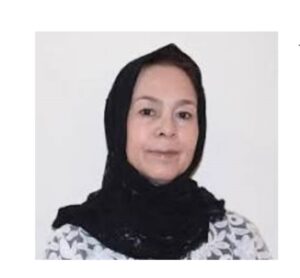
Photo credited: Internet