Dossier of Afghanistani Women Fiction Writers -20
Researcher: Qawm Shahi
Translator: Shekib Jaghori
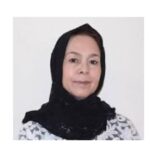
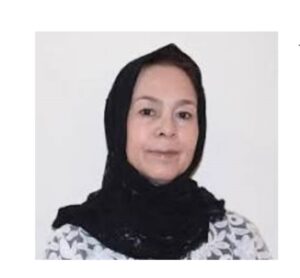
In the decades before Afghanistani women were pushed from classrooms, newsrooms, and cultural institutions, Aziza Khoshnasib was building a life that moved easily among them.
She wrote stories and poems, taught art, edited news, painted landscapes, and worked with children. At different moments, she was a journalist, an educator, a cultural administrator, and an artist. Taken together, these roles tell a larger story about a generation of Afghanistani women who entered public life not through a single profession but through many, helping shape the country’s literary and cultural landscape during a period when opportunities for women were expanding.
This is the reason why Afghanistan Women’s Voice has chosen to revisit her work. The story of Khoshnasib is not simply the story of one woman. It is also a window into a cultural history that has been dramatically altered since the Taliban’s return to power. At a time when women face severe restrictions on education, employment, and public
Participation, looking back at lives such as hers, serves as a reminder of what Afghanistani women created, sustained, and contributed across decades.
Long before exclusion became official policy, women were writing novels, publishing magazines, teaching art, producing research, painting exhibitions, and leading cultural organizations. Khoshnasib belonged to this world.
Her literary life began with fiction writing. As a young writer, she published four short stories in Sadaf Quarterly in Kabul and later wrote the novel Dar Dam-e Dad (In the Beast’s Trap), which was published in March 2024. She also contributed to children’s literature through collaborative projects such as The Golden Sparrow and The Tales of Sher Sultan, a three-volume illustrated series published in 2011 through a partnership between the Kabul Municipality and the United States Agency for International Development.
However, fiction was only the beginning. Over time, poetry became the form through which she developed her most distinct voice. Literary institutions and cultural organizations have described her as a poet concerned with women, society, and the human condition. Her first collection, A Window of Sunlight, was published by Takanak Publications in 2005. Khoshnasib has said that some of the poems in the book were written during the first Taliban regime, when schools and universities were closed to women. A second collection, Like Myself, followed in 2008, published by Khorasan-e Qadim Publications.
Alongside poetry, she devoted considerable energy to children’s literature and educational publishing. Her work in this field included Shine, Shine, Sunlight, a collection of children’s poetry published by the Afghanistan Cooperation Centre in 2000. She also contributed to broader educational and research projects, including the three-volume Art and Fine Arts in Afghanistan, published by the Afghanistan Information Resource Centre at Kabul University in 2010.
Her publications extend to research and arts education. They included The Artistic Value of Afghanistan’s Architectural Heritage, produced with Professor Mohammad Akbar Salam and published in 2011, and Understanding Color and Its Application in Creative Art, released in 2010. For younger readers, she produced illustrated
alphabet flash cards featuring children’s poetry published in Kabul in 2017, followed by Getting to Know Animals and Getting to Know Vegetables, both published in 2018.
Writing occupied only part of her working life. Khoshnasib also became deeply involved in journalism, cultural institutions, and arts education. She published Mojda, a children’s magazine, and oversaw cultural and artistic reporting for Honar. For years, she taught at the Afghanistan National Institute of Music in Kabul, remaining there until the day before the collapse of the Republic in August 2021.
Much of her career was devoted to establishing institutions. Beginning in 2000, she directed art programs at the Little Flowers Mental Development Foundation and the Pak-Negaran Arts and Culture Center. Over the following two decades, she rose through the organization, serving first as the deputy director and later as the president. She was also a co-founder of the two institutions.
Her professional network extends beyond Afghanistan. She became a member of the Afghanistan Pen Association, joined Afghan cultural associations in Hamburg and Berlin, and got affiliated with the Center for Contemporary Arts in Frankfurt. In the United States, she served as a founder and board member of Melodies of Freedom in Michigan.
Journalism is another constant thread. Khoshnasib worked as a news editor for the Institute for War and Peace Reporting (IWPR) and later for the Pajhwok Afghan News. Simultaneously, she led the Pak-Negaran Arts and Cultural Foundation and participated in various media projects, including the documentary Little Breadwinners, a report on the first collective exhibition of Afghanistani women painters, and the television series Sola wa Syal, in which she portrayed a foreign journalist named Christina in 2018.
Painting emerged as another important chapter in her life. Around 2012, she began pursuing visual art more seriously, particularly watercolor painting inspired by nature. Her work has been exhibited in Afghanistan, Qatar, and Portugal. In 2011, she participated in a Kabul exhibition featuring artworks made from recycled materials. A decade later, she displayed 20 watercolor paintings at an exhibition of Afghanistani refugee artists in Qatar and exhibited an acrylic work titled Skyscrapers. In 2022, thirty-six of her watercolor paintings were shown in Braga, Portugal, under the title Afghanistani Women: Phoenixes of Freedom.
Khoshnasib was born in 1975 in Mazar-e-Sharif, in Balkh Province, during the early years of Mohammad Daoud Khan’s republic. The country appeared stable at the time, although political upheavals lay ahead. Raised in an intellectual family as the daughter of Mohammad Sharif, she completed her schooling in Mazar-e-Sharif before studying physics at Kabul University. In 2000, she also completed journalism training through the Institute for War and Peace Reporting.
To read Khoshnasib’s life as a simple catalog of accomplishments would be to miss its wider significance. Her story traces two very different periods in Afghanistan’s recent history. One was an era in which women increasingly participated in education, literature, journalism, the arts, and public life. The other is an era in which many of those spaces were closed to them.
The span from 1975 to 2026 covers more than fifty years of Afghanistan’s history. During those decades, each return of Taliban rule brought new restrictions on women’s participation in education, employment, politics, culture, and public life. Against that backdrop, Khoshnasib’s career stands as more than an individual achievement. It reflects the work of a generation of Afghanistani women who wrote, taught, created, and led institutions, leaving behind a record that survives even as the conditions that once made it possible have been profoundly diminished.