Afghanistan’s Influential Women File – 6
Researcher: Qawm Shahi
Translator: Shekib Jaghori
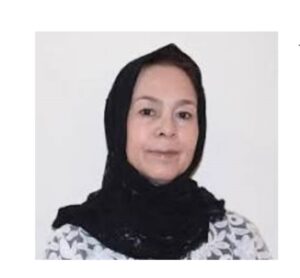
In this issue of the series« Afghanistan’s Influential Women »we focus on Shabana Basij-Rasikh, a woman who has been a voice for girls’ education in Afghanistan and has witnessed two periods of Taliban rule. Voice of Afghan Women seeks to identify and introduce such influential women and move beyond a narrative that portrays women only through oppression and sorrow. Highlighting influential Afghan women shows the agency of Afghan women, rather than presenting them solely as victims without a voice.
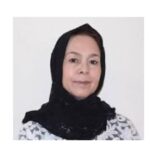
Shabana Basij-Rasikh, whose name is incorrectly written as« Shebana» in some online sources, is an educator, social entrepreneur and girls’ education activist in Afghanistan. She is the founder and president of the School of Leadership Afghanistan (SOLA). Because of her work in education, she has been recognized in international sources for her efforts to expand Afghan girls’ access to quality education.
Shabana Basij-Rasikh’s Impact on Afghan Society
Establishing the School of Leadership Afghanistan (SOLA)
In 2008, Afghanistan was facing a severe security and political crisis. It was a year described as the« worst year» since the international community’s presence in Afghanistan. Attacks by the Taliban, a terrorist group, had increased by 30 percent. That year, Shabana Basij-Rasikh was a first-year student at Middlebury College in the United States, filled with motivation and a strong sense of purpose to advance education for the girls of her homeland.
That year, she took an important step: establishing the School of Leadership Afghanistan or SOLA (School of Leadership Afghanistan) a school for Afghan girls. At the time, when she founded the school for girls with motivation and hope, she certainly could not have known that 13 years later, the doors to education would be completely closed to women and girls by the Taliban authorities.
SOLA initially began as an educational program for Afghan girls, created with the aim of providing quality education for them. However, in 2011 when Shabana Basij-Rasikh returned to Afghanistan, she launched SOLA as a full-time boarding school in Kabul. In its first year of operation, the school admitted its first group of 24 students. The school operated in Kabul from 2008 to 2021. Its work focused on educating girls at the secondary level and above.
Thirteen years after the establishment of SOLA, the republican government gave way to the Taliban in what the text describes as an international conspiracy and the group declared its Islamic Emirate. Following the fall of the republican government, Shabana Basij-Rasikh was faced with two choices: either close the School of Leadership Afghanistan or find a way to escape.
She chose the second option—a very difficult choice. She and her team then burned the students’ records to protect the students and their families, so that their identities would not fall into the hands of the Taliban. It was a rare and frightening episode in Afghanistan’s history: the identities of students were burned simply because they were receiving an education. This meant setting fire to the country’s cultural and educational history and records. It was also evidence of the Taliban’s failure to accept education, even in its most basic form. Surely no greater disgrace than this could be found in the historical record.
Finally, on August 20, 2021 Shabana Basij-Rasikh managed to evacuate nearly 250 members of the SOLA community, including students, staff and family members, from Afghanistan and resettle them in Rwanda. The most remarkable part of SOLA’s story is that on August 29 of the same month, just five days after the school was relocated to Rwanda, it resumed its activities.
This event marked a turning point in the history of SOLA and Afghanistan’s education system in exile: the School of Leadership Afghanistan moved from being a school based in Kabul to becoming an Afghan educational community in exile, and continued its activities without interruption just five days later. This demonstrated effective management and the ability of an influential woman who did not allow SOLA’s educational activities to come to a halt.
In exile, Shabana Basij-Rasikh continued her efforts with determination, not only maintaining in-person educational activities as before, but also facilitating and expanding digital education. On March 1, 2024, she launched the SOLAx program for online education. According to reports, the distance and online education program has created more opportunities for girls and students in Afghanistan to access education. Middlebury reported that by the end of 2025, SOLA had received more than 5,400 applications from Afghan girls around the world.
Shabana Basij-Rasikh: An International Voice for Afghan Women
Shabana Basij-Rasikh is now an internationally recognized figure. She has spoken at well-known international forums and raised the voices of Afghan women on some of the world’s most prominent stages. It is no small thing for a woman to become a voice and advocate for the women of her country. Here, we review a list of speeches by this influential woman—speeches that send a message to the Taliban: the Taliban authorities cannot silence the voices of Afghan women. If they silence women’s voices inside the country those voices will rise even louder across the wider world.
Speech at TEDWomen
On December 1, 2021, she spoke at TEDxWomen in Washington, D.C., under the title« Dare to Educate Afghan Girls» Her speech included her personal experiences of studying secretly during the Taliban’s first period of rule in Afghanistan, as well as the importance of education for Afghan girls. This speech represents an international voice for Afghan women in the field of girls’ education.
Speech at Washington University in St. Louis
On April 6, 2013, Shabana Basij-Rasikh participated in a public forum titled« A Better Future for Girls and Women: Empowering the Next Generation» at Washington University in St. Louis, a private research university in the United States. She spoke about empowering women and girls. In a report, the university wrote that Shabana Basij-Rasikh shared the story of her struggle to access education under Taliban rule.
Speech at Washington University in St. Louis
She spoke again at Washington University in St. Louis in 2013. The title of her speech was “Educate a Girl; Change the World.” This time, Shabana spoke about her journey from studying at a secret school in Kabul under Taliban rule to studying in the United States and later establishing the School of Leadership Afghanistan.
Speech at Middlebury College
She also spoke at Middlebury College in 2014, sharing her experiences, discussing education for Afghan women and talking about her efforts to create educational opportunities.
Speech at a TEDx Talk
She also gave a TEDx Talk in 2017. Her speech focused on Afghan women’s right to education and her experience of establishing a school for girls. On its official website, TED states that Shabana Basij-Rasikh’s school works to reduce tribal and gender divisions in Afghanistan.
Speech at a United Nations Security Council Meeting
Shabana Basij-Rasikh also spoke at a United Nations meeting on June 21, 2023, following the Taliban takeover of Afghanistan. In her speech, she said:
«I never imagined that the Taliban could reach a position where they could turn the dark period I experienced as a child into a reality for the people of Afghanistan once again. I was a child living in fear and terror, simply because I was a girl—a girl who wanted an education and nothing more than an education.»
In the same speech, she said:
«We recently concluded our admissions cycle for the new academic year. Historically, we never received more than 300 applications for admission in any single year. But this year, we received nearly 2,000 applications from Afghans around the world seeking to join our school. Two thousand Afghan girls, 2,000 flames in the darkness.»
Speech at Fay School in 2022
She also gave a speech at Fay School in 2022.
Speech at The Governor’s Academy in 2023
In 2023, she spoke at The Governor’s Academy, a private boarding school in Massachusetts, USA, about education, leadership, social responsibility and the role of young people in creating change.
Speech at the Women’s Forum in 2023
In 2023, she also spoke at the Women’s Forum in Washington, D.C., about rethinking inclusive education and the role of women in transforming education systems.
Commencement Speech at the University of Scranton in 2024
In 2024, she gave a speech at the undergraduate commencement ceremony of the University of Scranton in Pennsylvania. She spoke about curiosity, courage, asking difficult questions, knowledge, compassion and the responsibility to build a better world.
Speech at a Stanford University Panel in 2025
In 2025, Shabana Basij-Rasikh spoke on a panel at Stanford University about the resistance and continued efforts to provide education for Afghan women and girls despite the Taliban’s restrictions on education. She also spoke about the experience of evacuating the School of Leadership Afghanistan (SOLA) from Afghanistan, relocating its students, staff, and their families to Rwanda, and efforts to continue their education.
The importance of Shabana Basij-Rasikh’s participation in a panel at Stanford University, one of the world’s major academic and research institutions, lies in the fact that it brought the issue of Afghan women’s exclusion from education under Taliban rule from the domestic level to the level of an international and human rights issue.
Disguising Herself as a Boy While Studying
One of the most striking parts of Shabana Basij-Rasikh’s life story goes back to the first period of Taliban rule. Born in Kabul and raised in the city during Taliban rule, she had a frightening experience of trying to access education. Under the harsh conditions of Taliban rule, Shabana Basij-Rasikh was forced to wear boys’ clothes in order to attend a secret school. This was because education was banned for women and girls under the Taliban. If the Taliban had discovered that she was a girl attending school, Shabana would have faced punishment under their interpretation of religious law.
In other words, when Kabul fell under Taliban control in 1996, the group imposed a widespread ban on girls’ education. As a result of this ban, more than 100,000 schoolgirls in Kabul alone were forced to stop attending school. Under these circumstances, Shabana Basij-Rasikh wore boys’ clothes and presented herself as a boy so that she could attend school. In a report about her, National Geographic explained that there were no schools for girls under Taliban rule. Shabana Basij-Rasikh’s experience can be understood within the Afghan social tradition known as bacha posh, in which girls are dressed and treated as boys.
The idea that someone, whether a girl or a boy, would have to change their identity in order to access their basic rights is difficult to imagine. Yet this has been a reality in Afghanistan; Shabana Basij-Rasikh’s story reflects this dark period, when women and girls were forced to go to such lengths and even change their identities to access their rights.
Beyond all of this, however, what Shabana Basij-Rasikh’s story of being a bacha posh reveals is Afghan girls’ strong desire for education. Undoubtedly, an important part of Shabana Basij-Rasikh’s life story is her experience of living as a bacha posh during the first period of Taliban rule in Afghanistan—a story that reflects the Taliban’s policies.
The school where Shabana studied while disguised as a boy was an informal, non-governmental school. Classes were held in a private home. The students and teachers knew that their activities could be extremely dangerous. As Shabana said in one of her speeches, more than 100 students would gather in a single room. To avoid attracting the Taliban’s attention, the students placed their books in shopping bags so that if a Taliban member saw them on the street, they would assume the students had gone out to shop.
Shabana, her sister and the other students also changed their routes to and from school every day to avoid attracting the Taliban’s attention. Later, after the first period of Taliban rule ended, when Shabana began attending a formal school, she noticed something unusual during her first year. She found that many of her female classmates were several years older than her because they had lost their opportunity to receive an education during the Taliban’s rule.
Establishing the HELA Nonprofit Organization
One of Shabana Basij-Rasikh’s achievements is the establishment of the nonprofit organization« HELA.» The name« HELA» is a Pashto word meaning« hope.» The organization grew out of an idea—the idea of a girl who wanted to establish a girls’ school in Laghman—and seeks to keep hope for changing the current situation alive through education.
The origins of HELA date back to 2006, when Shabana Basij-Rasikh traveled to her ancestral home in Laghman Province. There, she witnessed firsthand the lack of access to secondary education for girls in her ancestral homeland. This experience led her to develop the idea of establishing a girls’ high school. Later, in 2009, she founded the nonprofit organization HELA Inc.
In 2011, Shabana Basij-Rasikh also launched the HELA Project for Afghanistan, a campaign to raise $100,000 to build a girls’ high school in Laghman.
Awards and Honors
Shabana Basij-Rasikh’s ideas, creativity, and educational entrepreneurship have not gone without international or domestic recognition. It is deeply rewarding to see the impact of one’s work recognized firsthand. Here, we review a list of her awards, honors, and honorary doctorates to highlight, in the face of the Taliban, the abilities and potential of Afghan women.
• Shabana Basij-Rasikh was named one of the Top 10 College Women of 2010 by the renowned American international magazine Glamour.
• In 2011, Shabana Basij-Rasikh received the Madeleine Kunin Public Service Award for her leadership, public service and social activism.
• In 2014, Shabana Basij-Rasikh was selected as one of the« Leading Women» by CNN International.
• In 2014, Shabana Basij-Rasikh was selected by National Geographic as one of its« Emerging Explorers,» in recognition of her work in girls’ education in Afghanistan and her related social work.
• In 2018, Shabana Basij-Rasikh received the Malalai Medal, one of Afghanistan’s most important national honors and medals, for her efforts to expand Afghan girls’ access to education.
• In 2019, Shabana Basij-Rasikh was included in Forbes’ annual« 30 Under 30 Asia» list. Each year, Forbes selects 300 young people under the age of 30 from across Asia and the Pacific. Those selected are recognized for outstanding achievements in areas such as entrepreneurship, technology, science, sports, the arts, media and social activism.
• In 2021, Shabana Basij-Rasikh received the Middlebury Alumni Achievement Award from the Middlebury College Alumni Association, in recognition of her personal achievements and outstanding contributions.
• In 2023, she received the Asia Game Changer Award from the Asia Society. Often referred to simply as the« Asia Game Changer Award,» the award is given to individuals who have made a significant impact on strengthening connections between Asia and the world.
• In 2024, Shabana Basij-Rasikh received an honorary doctorate from the University of Scranton, a private university in Pennsylvania, USA, in recognition of her work in girls’ education in Afghanistan.
• In 2024, she received an honorary doctorate from Roger Williams University, a private university in Rhode Island, USA. This honorary degree is awarded in recognition of individuals’ achievements, leadership, public service, or outstanding impact.
• In 2016, Shabana Basij-Rasikh received an honorary doctorate from SOAS University of London.
• In 2019, she received an honorary doctorate from Cedar Crest College in Pennsylvania, USA, in recognition of her work in girls’ education and educational leadership in Afghanistan.
Education
During the first period of Taliban rule, Shabana Basij-Rasikh secretly attended a non-governmental school while disguised as a boy. After the fall of the Taliban’s first government, she completed her primary and secondary education in Kabul. At around the age of 15, she was given the opportunity to travel to the United States through the Kennedy-Lugar Youth Exchange and Study (YES) program, where she completed her final year of high school in Wisconsin.
She then enrolled at Middlebury College, where she studied International Studies and Women’s and Gender Studies. In 2011, she graduated from the college magna cum laude, an academic distinction awarded to students who achieve a very high level of academic excellence.
In 2019, she began a one-year master’s program in Public Policy at the Blavatnik School of Government, University of Oxford, in the United Kingdom. She completed the program and earned an MPP (Master of Public Policy) degree.
Personal Life
Shabana Basij-Rasikh, as she introduced herself at a United Nations Security Council meeting in 2023, is named« Shabana Basij-Rasikh,» not« Shabana.» The latter spelling appears to have been used in some online sources based on translations from English-language sources and was then copied from one source to another without verification.
Her date of birth is not stated in any official online document. The only information available is from a BBC report, which states that Shabana was six years old when the Taliban first took control of Kabul in 1996.
Her father was an educated man and a former member of Afghanistan’s military, while her mother also played an important role in raising and educating their children. This strong emphasis that Shabana’s parents placed on their children’s education later influenced the course of her life and contributed to her becoming one of the influential women in the field of education in Afghanistan.