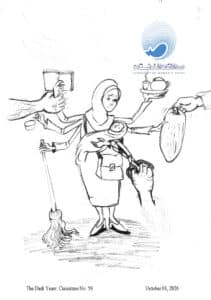
Official statistics from domestic media, credible international organizations, and field realities in Afghanistan indicate that suicide rates—particularly among young girls—have increased in an unprecedented manner
While global studies show that worldwide, suicide rates are higher among men, particularly young boys, this grim phenomenon in Afghanistan, contrary to global data, has become prevalent among young girls.
Voice of Afghan Women has conducted interviews with a number of young girls in order to identify the causes behind the spread of suicide. The interviewees, while expressing concern over the prevalence of this phenomenon, discussed its underlying reasons.
Nasiba, a student at a religious madrasa, attributes the rise in suicide among girls to “societal psychological pressures, discrimination between boys and girls, and being overlooked by their families.”
According to her, when girls face various forms of discrimination in society, their identity and human dignity are sidelined, and they find themselves facing a dead end that may ultimately lead to suicide or self-immolation.
Soraya, another interviewee who spoke with Voice of Afghan Women, believes that domestic violence, forced and underage marriages are among the main causes of suicide among young girls.
According to Soraya, girls who grow up with hundreds of hopes and dreams, and envision a future for themselves and their society, are suddenly forced into child marriage; in such circumstances, social and familial shock and disruption are hardly unexpected.
Other interviewees emphasize that “poverty, the denial of human freedoms, restrictive limitations, and the prevention of girls’ education and advancement” have a significant impact on the rising suicide rates.
They stress that these factors, collectively, contribute to poorly managed anger and rising levels of depression among girls. This comes while global indicators identify depression as one of the leading causes of death.
The comprehensive repression and prohibition of women, who are currently barred from work and social activities, have left them in a state of isolation and depression. Half of the country’s population, due to the inhumane and anti-human policies of the ruling regime, has lost hope for their future; under such circumstances, a rise in depression levels is unsurprising.
Previously, credible international organizations, including the United Nations Children’s Fund (UNICEF), warned in a report that levels of depression among Afghan citizens—particularly girls deprived of schools and universities—have risen.
Nonetheless, the Taliban regime, disregarding these alarming statistics, has once again barred women and girls in the country from attending schools and universities for the fifth consecutive year.
In conclusion, not only is a decline in suicide rates unlikely, but with the continuation of the Taliban regime’s discriminatory policies, an increase in these rates appears even more probable.
Photo credited: Internet