File on Women Story Writers of Afghanistan _ No. 18
Researcher: Qawm Shahi
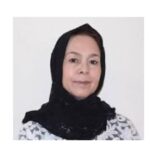
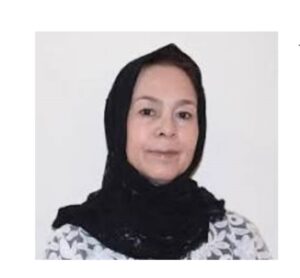
Homeyra Ra’fat is a fiction writer from the generation of Afghan authors born in the 1350s of the Solar Hijri calendar. Her name appears alongside other contemporary Afghan fiction writers in different short story collections. She is one of the Afghan women writers whose stories show the lives of women living under the pressure of traditional social customs. This is something that neither journalists nor historians can fully show because fiction can explore people’s lives, feelings and experiences in a deeper way.
Fiction is like a mirror in which society sees itself. It reflects injustice, violence and the contradictions of everyday life without hiding them. For this reason, fiction is not only a form of entertainment. It is also a way to understand society, question social problems and encourage people to think about them. For example let us look at a few lines from Homeyra Ra’fat’s short story« Snow and the Footprints of Bare Feet.»:
« My father’s voice woke me up. It was very late. It was night and my father was angry. I pushed the blanket aside. My father looked serious. Unlike other times, when hatred and anger made his eyes seem bigger and more frightening, that night there was a small light of hope shining through them. As always, I was afraid when I looked into his eyes. What if it is another girl? … Poor thing! Who was he talking about? In the bond that tied us together none of us had a happy life, although we had accepted our unhappiness. We had no brother and my parents had no son. My mother quietly cried out in pain. Even then, she seemed afraid that my father would become angry if she made too much noise. It was a winter night and snow was falling. When my mother’s pain became stronger, my father went to find the midwife…»
These few lines clearly show the important role of fiction and fiction writers in helping us better understand the hidden realities of society and the private lives of families. They reveal the traditions of discrimination against women that have deeply influenced many Afghan families especially Afghan men.
Fiction Writing
The year 1369 in the Solar Hijri calendar (1990–1991) was one of the most difficult years in Afghanistan. It came at the end of the Soviet–Afghan War and shortly before the collapse of the Democratic Republic of Afghanistan. The country was facing a political, social and cultural crisis while also going through a period of change. During this time fighting continued between the central government and the U.S.-backed Mujahideen forces.
The period of the People’s Democratic government was one of the best times for the growth of fiction and literature in Afghanistan. It was during these years that Homeyra Ra’fat began writing fiction. Biographical sources describe her as belonging to the circle of writers from Balkh. She officially started writing short stories in the early 1370s (Solar Hijri calendar).
Works
The short story collection« A Look from the Other Side of the Window» was published in Saratan 1381 (July–August 2002) in Peshawar by the Cooperation Center for Afghanistan (CCA). The collection focuses on the lives and challenges of women and girls living in traditional families.
This collection includes eight short stories: Our City and the Vultures, The Black Pots, Pieces of Colored Cloth, Snow and the Footprints of Bare Feet, The Picture on the Wall, A Lone Rider Across the Plain, The Return, Hands, and A Look from the Other Side of the Window.
Another published work by Homeyra Ra’fat is the short story A Look from Beyond the Windows, which appeared in the anthology Stories of Afghan Women (2012 edition).
In addition to fiction writing, Homeyra Ra’fat also has experience in media work. In 1371 (1992–1993) she worked for the magazines« Islahat-e Arzi» and« Mirman».
Education
Homeyra Ra’fat graduated from Zarghona High School in 1368 (1989–1990). That year was one of the most important periods in modern Afghan history. It marked the beginning of the post-Soviet occupation era and the start of a new phase of war in the country.
In 1367 (1988–1989) she entered the Faculty of Engineering at Kabul University at the same time as the withdrawal of the last Soviet troops from Afghanistan.
The year 1371 (1992–1993) was one of the most tragic years in our modern history. In this year, the government of Dr. Najibullah collapsed. The Mujahideen forces—groups supported by the United States and other countries opposed to the Soviet Union—entered Kabul. Soon after fighting began between different Mujahideen factions. This year marked the end of the Democratic Republic of Afghanistan and the beginning of a civil war among the Mujahideen groups.
Following the political changes and the fall of the Democratic Republic of Afghanistan, as well as the start of the civil war among Mujahideen factions, Homeyra Ra’fat left university. However, in 1375 (1996–1997) she continued her studies at Balkh University in Mazar-i-Sharif. In the same year, Kabul fell to the Taliban. The Mujahideen government came to an end. The Taliban regime took control over much of Afghanistan and led the country into a period of serious political, social and cultural decline.
Conditions became very difficult. Homeyra Ra’fat once again left university and went into exile in Pakistan.
The year 1381 (2002–2003) is considered one of the most hopeful and decisive years in modern Afghan history. It marked the beginning of a new system after the fall of the Taliban as well as the start of political, cultural and social reconstruction in the country. In this year, Homeyra Ra’fat returned to her homeland, continued her studies and graduated from university one year later.
Migration
In 1377 (1998–1999) with the rise of the Taliban in the country, Homeyra Ra’fat became a refugee and sought asylum in Pakistan. She settled in Peshawar, where she continued writing fiction. Her short story collection was also published in this city and during this period by the Cooperation Center for Afghanistan. In 1381 (2002–2003) after the fall of the Taliban and the return of hope and stability she returned to her homeland.
First Event
The year 1357 (1978–1979) marked the end of the Barakzai dynasty in Afghanistan and the end of the monarchy, when Mohammad Daoud Khan declared the Republic of Afghanistan. It is considered one of the most important years of Afghanistan in the twentieth century. In this year, Homeyra Ra’fat was born in Kabul. According to some sources she originally comes from the Behsud region. Based on this background, she is believed to be of Hazara ethnicity.
Fiction and the novel, as products of the modern world, are not only literary genres. They are among the most powerful tools for shaping human mind, emotions, imagination and thinking. Political power rules through law and force, but fiction and novels by entering the human consciousness recreate the world in a new way.
People form many of their beliefs not from philosophy books or scientific essays but from the stories they read, hear and connect with through the characters they identify with. Paul Ricoeur a philosopher and literary scholar, argues in his theory of narrative identity that human beings understand themselves and the world through storytelling. We interpret our lives as stories and build both our individual and collective identity based on narratives.
Based on this reasoning, the magazine« Voice of Afghan Women» aware of the power that lies in narrative and storytelling practices as well as the creative strength of women’s writing, has included the study of Afghan women fiction writers in its research and publication agenda. Afghan women fiction writers represent an important aspect of the expression of women’s power in Afghanistan.
To be continued.