Interviewer: Qadam Shahi
Translator: Shekib Jaghori
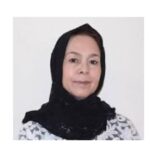
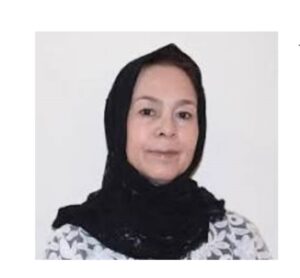
Fatema Reja speaks simply. Her story speaks for itself.
Her story is not only hers. It echoes the lives of countless Afghanistani girls whose voices remain unheard, girls who, like her, have either been forced into exile or remain confined under the weight of a system that has pushed them out of public life.
She was born on April 28, 2001, in the village of Mish in central Daikundi, a place her father described as stretching between the Choghani Mountains and Sarakh Lash. Her father, Mohammad Reja, is a photographer, human rights activist, media figure, and poet. He was also among the earliest media and civil society figures in his region, known for speaking openly and critically, even at the risk of personal harm. She completed her schooling in her village and grew up in a family that valued education.
After finishing school, she planned to take the university entrance exam. That changed when a Swiss charity, Afghanistan Hilfe Schaffhausen, started an 18‑month English language programme nearby, as part of broader efforts supporting education, healthcare, and vulnerable communities. Her father asked her not to take the exam that year because she was pregnant. He told her that the university would still be there, but a free English course close to home might never come again. She agreed.
Before the course ended, the Afghan government had collapsed. The Taliban returned.
“I lost both,” she says. “The course and university.”
Soon after, her family left Afghanistan for the United States.
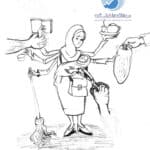
Today, she works as a tailor in a garment factory on the outskirts of Tehran. Her days are spent behind sewing machines.
“I stitch life with the needle,” she says. “With every movement, it feels like my life is being stitched away, like every moment is being sealed into something I did not choose.”
She does not deny the value of the work. “Work is dignity,” she says, “But my dreams were different.”
In Afghanistan, these dreams felt close. She wanted to attend university, build a respected career, read, travel, meet people from different cultures, and contribute to society.
She now describes her life differently.
“Behind me, all bridges are broken. Ahead of me, all doors are closed.”
She pauses and then adds quietly:
“Sometimes, the heaviest thing a person carries is not their body, but the dreams they carry inside them.”
However, she stated that she has not completely given up.
Most workers at the factory are migrants. She estimated approximately 85 percent.
“Migrant workers are cheaper,” she says. “Easier to remove. If the employer wants, dismissal happens easily.”
Each worker, she explains, carries quiet struggles that remain unseen by the public.
Her journey to Iran was not a choice. After the Taliban returned, her father became a target due to his work. Armed men came looking for him and took him away. They did not find him. Instead, they arrested her cousin. He was imprisoned and tortured for his actions.
He was later released through mediation and payment, but only after committing to a 25-day search for her father.
When the family saw the marks of torture on his body, they understood what would happen if their father was captured.
“We knew he would not survive,” she says.
She explained that her father had long been under pressure, had been detained before, had been threatened repeatedly, and was known publicly for his criticism of both the Taliban and corruption in local authorities. After the Taliban takeover, this risk became immediate.
They left at night. Her father travelled separately. The rest of the family followed the next day. Trust was difficult. They did not know who was safe and who was not safe.
For months, they lived in hiding in the Daikundi province. Nights were filled not only with fear but also with sleeplessness, anxiety, and recurring dread. The journey to Kabul then began. On their way to the city, they encountered Taliban fighters more than once.
One moment remains fixed in her mind: Taliban fighters stormed the hotel where they were staying and searched it, room by room.
When they entered, she held her younger siblings tightly and tried to shield them from what they would see.
“We died a thousand times,” she says.
Her father was not present at the hotel. Her thoughts quickly shifted to fear. What if he is arrested? What if he is tortured? What if he is killed?
After the Taliban left, her mother had fainted.
Her father’s camera and laptop, which contained sensitive materials, were hidden under baby clothes in a suitcase. The officers did not conduct a close inspection.
“God helped us,” she said.
They crossed into Iran 17 days before the Persian New Year.
Even after arriving, the fear did not leave them.
“For some time, I lost my sense of taste,” she says. “I could not tell what was sweet or bitter.”
She stated that her main concern was not for herself but for her father.
She spoke about the Taliban without hesitation.
“They are against knowledge, against dignity,” she says. She then adds more directly, “They are afraid of knowledge. They are afraid of women.”
She points to what she sees as contradictions.
“They call women weak, but they are afraid of them.”
She believes that fear is the reason women have been pushed out of public life.
Before everything changed, her life was simple. Her family lived at a relatively comfortable level of income. Her focus was school.
“I was a happy girl,” she says.
She did not think about hunger, displacement and deportation. These fears now define her daily life. Even if she returns one day, she says that nothing will feel the same.
“We only live once.”
In Iran, she tries to keep learning about the disease. After long hours at the factory, she attends English classes every other night. She also studied computer skills.
There was a time when she completely stopped. She described a period of deep depression. She then made a decision.
“There are thousands like me,” she says. “If I cannot help everyone, I must at least save myself.”
Learning English was the only realistic option she could afford.
Continuing formal education has not been possible for these students.
“It is very difficult,” she says.
This process involves repeated applications, documentation, and delays. However, there are often rejections. Sometimes, Afghan applicants are not accepted. Sometimes, there is no decision at all. By the time the steps are completed, the academic year has ended.
She describes her generation as being shaped by struggles.
“Others start life and build,” she says. “We started by fighting.”
Fighting with war, poverty, displacement, and invisibility.
“We are the burned generation,” she says. Then she adds, “A generation whose dreams were ruined before they could become reality.”
Her memories of Afghanistan were strong.
“All 19 years I lived there are memories,” she says.
She finds it painful to speak of them because of how it all ended.
She believes that the suffering of Afghan women has often been used without meaningful action.
“Silence is not different from participation,” she says. Then she adds, “Sometimes it feels as if our pain has become something others speak about, but do not act on.”
In her view, those who issue statements without action share the responsibility.
Her days in Iran followed a strict rhythm. She wakes at 6:00 am, works long hours, returns home, and attends language classes and computer training. By the time she returns home, she is exhausted. Fridays are often spent sleeping by students.
There is little time for socializing.
“Our bodies are here,” she says, “but our minds remain in Afghanistan.”
She once imagined studying literature and law. Books shaped her childhood. She recalls secretly opening her father’s locked box of books to read novels, sometimes forcing it open despite being warned against doing so.
“At first he opposed it,” she says. “Sometimes we were punished. But later he began bringing books himself.”
Those days now feel distant.
“Neither literature happened, nor law,” she says.
She described her life in Iran as unstable.
“There is no way back and no way forward,” she says.
Every day carries fear. Fear of arrest. Fear of deportation. Fear of what awaits them if they return.
“We sleep with fear. We wake up with fear.”
Migrant female workers face severe challenges. They do not receive the benefits that local workers receive. No insurance, housing, or paid leave. They work long hours for low pay. In many cases, women carry the burden of supporting the family, especially when male relatives cannot work due to a lack of legal status.
When asked about the future, she paused.
“I just hope these days pass,” she says.
She believes that light will eventually overcome darkness.
“But our lost time will not return.”
Her father held a respected position in the community. He helped resolve conflicts, supported development projects, and spoke out against injustice. People trusted him.
He now lives in exile, facing illness, poverty, and uncertainty.
“No one hears him,” she says.
She believes that he did not deserve this.
If they are forced to return to Afghanistan, she sees no alternative to their survival.
“It means arrest, torture, or death for my father,” she said.
This means going towards death.
If the previous system had not collapsed, she believes that her life would have followed a different path. She would have completed university, found work, and moved towards her dreams.
That future no longer exists today.
She views her story as part of a broader narrative. Afghan women, she says, have endured little recognition. Doors have closed. Voices have been silenced in this way.
However, they have continued.
“We were struck,” she says, “but we did not fall.”
Finally, she adds something that was not asked.
She speaks about silence again, but this time differently.
She says she sometimes wishes people would ask about those who remained silent and what that silence means.
She does not reject all patients. Some men stood with women, she says, but their voices were not heard.
She paused before finishing.
There are stories, she says, that have never been written. Lives that will never be fully told.
She ends with a simple thought:
She does not like stories with sad endings.
She still hopes that this will end differently.