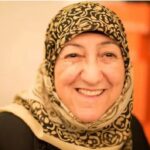
Fatima Akbari watched the republic collapse. Now, from a small city on Germany’s eastern border, she is trying to build a new life while holding on to memories of the country she left behind.
Interview by Afghanistan Women’s Voice
When Fatima Akbari thinks of Afghanistan, she remembers more than just politics.
She remembers a village in Daikundi, long days of study, public speeches as a schoolgirl, years spent working as a prosecutor, and the optimism that once convinced her to run for parliament. She remembers the promises and failures of the republic government. She remembers the day it fell off.
Now living in Germany after years of displacement, the former Deputy Governor for Social Affairs in Daikundi speaks from the perspective of someone who has experienced two very different realities: a career in public office and a life rebuilt in exile.
In a wide-ranging conversation, Akbari reflects on her upbringing, years in government, the collapse of the republic, the condition of women under Taliban rule, and the lessons she has learned since leaving Afghanistan.
Your story begins in a small village in Daikundi, Afghanistan. What do you remember most about those years?
I am Fatima Akbari, the daughter of Haji Ewaz.
People sometimes confuse me with another Fatima Akbari from Daikundi, an entrepreneur who founded the Golestan-e-Sadaqat Company and graduated from the American University of Afghanistan. We share the same name but have very different journeys.
I was born in Siah-Sang village in Ghajurbash of Bandar in the Sangtakht-Bandar district of Daikundi province. I spent my childhood there and completed my schooling.
Education has shaped everything for me.
I graduated at the top of my class. Even before finishing school, I had begun teaching and serving as a head teacher. During national ceremonies and public gatherings in the district center, I was often invited to speak on the subject. Looking back, these experiences have given me confidence and a sense of responsibility.
Later, I enrolled in the Faculty of Education at Balkh University and studied pedagogy there. Simultaneously, I pursued a second degree in Law and Political Science at Arya Private University.
My university years were busy. Alongside my studies, I became one of the founders of the Daikundi Students Association in Balkh.
History changed course.
After the Taliban returned to power, I moved to Iran, where I continued my education at the University of Isfahan. There, I studied International Relations and completed my master’s program up to the stage of defending my thesis.
You have spoken before about witnessing violence against women when growing up. Did these experiences influence your career choices?
Very much so.
As a child and teenager, I witnessed many instances of domestic violence, especially violence directed at women. These scenes left a lasting impression on me.
This is one of the reasons I became interested in law and justice. Even at a young age, I believed that one day I should work in a field where I could defend women’s rights and support people facing injustice.
After completing my degree, I entered the justice system in Afghanistan as an investigative prosecutor in Daikundi.
Reaching this position required passing a highly competitive examination. The process was difficult, but eventually, I was appointed and began working at the Attorney General’s Office.
For a while, I was happy with that role.
Then, I began to think about broader changes.
I wanted to contribute beyond individual legal cases. I wanted to help shape policies and represent people on a larger scale.
This led me toward politics.
The first step was the parliamentary campaign in 2018.
Yes.
In 2018, I resigned from my position as a prosecutor and ran for parliament as an independent candidate in Daikundi.
My campaign slogan was simple: “Voice of the People.”
The principles I emphasized were commitment, moderation, and service.
Those words mattered to me then, and they continue to hold significance for me now.
The decision to run was partly my own and partly encouraged by others. Many people around me urged me to stand as a candidate. They believed that women should have a stronger voice in politics and convinced me that I could represent ordinary people.
The campaign was one of the most memorable periods of my life.
I travelled, listened, and spoke with communities across the province.
At the end of the election, I had received more than 4,000 votes.
I did not win a seat.
However, I never considered that experience a failure.
Sometimes life takes you along a path different from the one you originally planned.
Shortly after the election, I was appointed adviser to the Governor of Daikundi. Later, I became the Deputy Governor for Social Affairs.
Looking back, it feels like it was another era.
You advanced quickly. From a prosecutor to a deputy governor in just a few years. How do you remember the Republic today?
With mixed feelings.
The republic provided many people with opportunities that they would not have otherwise had, especially women.
However, it had some serious weaknesses.
Afghanistan’s history is full of political collapses, and the republic became part of this pattern.
Some of these reasons were external factors. Afghanistan’s location has always attracted interference from outside powers. Groups such as the Taliban did not develop in isolation from the international community. Foreign involvement has played a role in shaping many of the country’s conflicts.
However, external influence alone does not explain what happened.
There were also internal problems in the study.
Afghanistan has suffered from weak political cohesion, cultural challenges, and the absence of a strong common vision. Extremist ideas have existed for decades and have become deeply entrenched over time.
When I think about the immediate causes of the republic’s collapse, one event stands above all others: the Doha Agreement.
This agreement fundamentally changed the balance of power.
At the same time, ethnic tensions, factional disputes, and disagreements among political leaders existed. The state often appeared unified on paper, but in reality, it struggled with fragmentation.
Working in the provincial government, I constantly witnessed the effects of excessive centralization.
Too much power was concentrated in Kabul. People in the provinces remained far from the centers of decision-making.
These weaknesses accumulate over time.
Eventually, the system could no longer be held.
As one of the women who served in senior government positions, how do you compare the republic with what Afghan women face today?
This difference is enormous.
During the republic, many efforts were made to reduce gender-based discrimination. New laws and procedures were introduced. Afghanistan has attempted to align itself with international conventions concerning women’s rights. Measures such as the Law on the Elimination of Violence Against Women are important steps.
This does not mean that discrimination disappeared.
Women still face obstacles.
But women had opportunities.
They could study.
They could work.
They can participate in politics.
They could build careers.
Today, Afghan women face a different reality.
In my view, the current period is one of the darkest chapters in Afghanistan’s history.
Women have been effectively removed from much of social, political, cultural, and economic life.
When a woman is denied education, employment, freedom of movement, the ability to choose her future, or even the ability to make decisions about her own life, we are talking about something larger than gender discrimination.
We are discussing the denial of basic human rights.
The consequences of this are visible everywhere.
Women live under immense pressure.
Many people are experiencing despair.
Reports of suicides have increased.
I have not seen another system anywhere in the world that imposes such extensive restrictions on women.
The return of the Taliban did not simply change the government. It transformed the everyday lives of millions of women.
The political bargain that led to the republic government’s collapse remains one of the most harmful deals in Afghanistan’s modern history.
Many educated Afghans have left the country after 2021. What impact do you think this has had?
This has had a profound impact. The evacuation and subsequent migration created a real intellectual vacuum.
Afghanistan did not simply lose people. It lost professionals, academics, researchers, administrators, and skilled workers.
It lost experience.
It lost expertise.
It has lost its institutional memory.
At the same time, extremist voices gained more prominence.
During the republic government, discussions about democracy, freedom of expression, and human rights were part of public life. Today, this intellectual environment has largely disappeared.
The consequences of this can already be observed.
Higher education has also suffered.
Research has suffered.
Scientific production has, however, declined.
Cultural and intellectual lives have weakened.
Many trained specialists have been replaced by individuals who do not possess the same level of qualifications.
That concerns me deeply.
I believe that Afghanistan faces a very difficult future if these trends continue.
Do you remember where you were when the Republic Government fell?
I remember these days very clearly.
These are among the most painful memories of my life.
I was afraid.
I feared the Taliban, but I had other concerns as well. I received warnings and threats from certain local commanders. I do not think it is necessary to discuss these details publicly, but they add to the uncertainty.
Leaving Afghanistan was one of the most difficult experiences of my life.
People often discuss the fall of the Republic as a political event.
For me, it was much more personal.
It felt as though hopes, ambitions, and years of effort disappeared overnight.
Words are insufficient to fully describe it.
Even now, it is difficult to capture what that moment felt like.
At the time, I had received approvals from programs connected to Canada and the United States that would have allowed me to leave.
Yet I stayed.
I loved my country.
I hoped that circumstances might change.
Eventually, however, remaining was no longer possible.
I crossed into Iran and began a new chapter in my life.
In Isfahan, I continued my studies and devoted myself to learning new things.
Later, I moved to Germany.
How did exile change you?
Migration teaches lessons that cannot be learned elsewhere.
This also caused significant pain.
There are two types of migration. One happens by choice. The other happens because there is no alternative.
Exile belongs to the second category of punishment.
When you are forced to leave your homeland, you do not know what the future holds. Everything feels uncertain. You face language barriers, cultural differences, and a constant sense of longing for home.
I have experienced all these things. The early years were difficult for me. Learning a new language is challenging.
Being far away from my people while Afghanistan has been experiencing such upheaval made the experience even more difficult. However, migration also gave me opportunities.
I learned a new culture. I built friendships. I gained a deeper understanding of the democratic society.
Many of the concepts, I once studied academically, such as pluralism, tolerance, and coexistence, became real experiences rather than abstract ideas.
At the university, these concepts existed in books. In Germany, I experience them in my daily life.
My degree in pedagogy was officially recognized here, which allowed me to work professionally in education.
Today, I work for Internationaler Bund (IB), a non-governmental organization that provides language instruction, vocational training, social support, and integration services for migrants and refugees. I work as an adviser to support young migrants and refugees in the education sector.
I live in Zittau, in Saxony’s Görlitz district, near the borders of Germany, Poland, and the Czech Republic. Earlier, I was elected to the Migrants’ Council, sometimes called the Advisory Council for Foreign Nationals. The council includes representatives from political parties, academics, and members of established migrant communities.
I serve as a representative of the migrants. This role is significant to me. The role allows me to continue serving people, even in a different country.
Migration has also given me something else: Independence.
I obtained my driver’s license.
I cycle with my German friends during my free time.
I make decisions for myself.
Independence is incredibly important for women.
In Germany, I have that independence.
When you think back to your 2018 campaign, what stays with you?
The memories.
More than anything else, memories. These were some of the most meaningful days of my life.
At that time, I genuinely believed that politics could serve people.
I still believe that.
The principles that guided my campaign remain the same today: commitment, moderation, service, and being a voice for ordinary people.
Afghanistan has changed dramatically since that time. Half of society has been effectively pushed aside. Many opportunities have disappeared. However, my commitment has not changed.
Whether I am in Afghanistan or abroad, whether I hold a public office or not, I will continue to be a voice for the people of Afghanistan and the women of my country.
Some responsibilities do not end when a position ends.
They travel with you, even in exile.